
Drip coffee makers brew filter coffee by passing heated water through ground coffee and a filter, offering a straightforward and consistent method for everyday use.
Unlike espresso machines, which produce concentrated coffee and often require more hands-on preparation, drip coffee makers are designed to brew several servings at once with minimal effort.
They are a practical choice for households that prefer a full carafe, want coffee ready for more than one person or value a simple routine that fits easily into the morning.
The right model depends on how much coffee you usually brew, whether you prefer a glass or thermal carafe, how much countertop space you have and which convenience features—such as programmability or automatic shutoff—matter most to you.
Explore Drip Coffee Maker Options
Glass Carafe Drip Coffee Makers
Glass carafe drip coffee makers collect brewed coffee in a transparent carafe, making it easy to see how much coffee remains. Most models use a warming plate beneath the carafe to keep the coffee hot after the brewing cycle has finished.
This setup can be practical when coffee is usually served relatively soon after brewing. When comparing models, consider the warming controls, carafe capacity and how long you normally expect a brewed batch to remain available.
Programmable Drip Coffee Makers
Programmable drip coffee makers allow the brewing cycle to be scheduled in advance, so the machine can begin preparing coffee at a selected time. Depending on the model, programmable features may also include automatic shutoff or other timing controls.
The main benefit is not a different brewing method but a more automated daily routine. This can be useful if you regularly prepare coffee at a predictable time and want the machine to begin brewing without starting the process manually each morning.
Thermal Carafe Drip Coffee Makers
Thermal carafe drip coffee makers collect brewed coffee in an insulated carafe designed to retain heat without continuously warming the coffee from below. The carafe can usually be removed from the brewer and used for serving while helping the remaining coffee stay warm.
This format can be useful when a batch is consumed gradually rather than immediately after brewing. When comparing machines, consider carafe capacity, heat retention, pouring and cleaning as part of the everyday setup.
Compact Drip Coffee Makers
Compact drip coffee makers provide automatic filter-coffee brewing in a smaller footprint. They can fit more easily into apartments, offices or coffee areas where countertop space is limited.
The main trade-off is often capacity. A smaller machine may prepare fewer servings or use a smaller water reservoir and carafe. Check the dimensions together with the amount of coffee you normally brew, and allow enough surrounding space to fill the reservoir, access the filter basket and remove the carafe comfortably.
How to Choose a Drip Coffee Maker
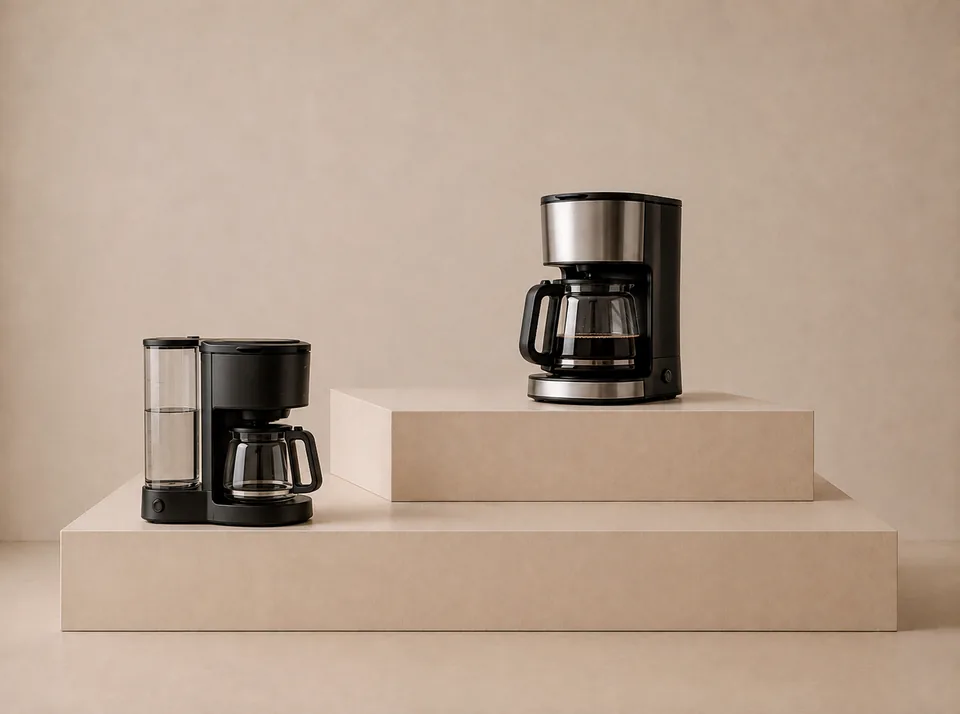
Choosing a drip coffee maker starts with understanding how much coffee you brew, when you drink it and which features genuinely support your routine. Capacity, carafe type, programmability and brewing performance all affect whether a machine is practical for everyday use.
A well-matched brewer should prepare the amount of coffee you need consistently, fit naturally into your routine and keep the process simple without adding features you are unlikely to use.
Coffee Volume and Daily Routine
One of the first things to consider is how much coffee you usually brew at one time.
Some households need only one or two mugs in the morning, while others prepare a full carafe to share or drink over several hours. Check the brewer’s stated capacity, but remember that the “cups” used in product specifications are often smaller than a standard coffee mug.
Consider:
- How many people regularly use the machine
- How many mugs you usually prepare in one brew
- Whether you prefer a fresh small batch or a larger carafe for the day
Choosing the right capacity helps prevent overbrewing and ensures that the machine suits your actual routine.
Brewing Features
Drip coffee makers range from simple one-button models to machines with programmable and adjustable brewing controls.
Useful features may include:
- A programmable start time
- Automatic shutoff
- A small-batch setting
- Brew-strength control
- Pause-and-pour or adjustable keep-warm controls
Choose features that solve a real need in your routine. Additional settings offer little value when they are unlikely to be used regularly.
Carafe Type
The carafe affects how coffee is served and kept warm after brewing.
Glass carafes let you see how much coffee remains and are usually paired with a warming plate. They work well when coffee is served soon after brewing, but leaving the carafe on direct heat for too long can gradually make the coffee taste flatter or more bitter.
Thermal carafes retain heat through insulation and do not rely on a warming plate. They are better suited to coffee that will be consumed over a longer period, although their opaque design makes the remaining amount harder to see.
Choose based on how quickly you drink a batch and whether visibility or longer heat retention matters more to you.
Coffee Quality and Consistency
Brewing performance matters more than an extensive feature list. A reliable drip coffee maker should maintain an appropriate water temperature, distribute water evenly over the grounds and provide a suitable brewing time from one batch to the next.
Consistent temperature and saturation help produce a balanced cup, while poor water distribution can cause uneven extraction across the coffee bed.
The final result also depends on fresh coffee, the correct grind size and an appropriate coffee-to-water ratio, but the machine should provide a stable foundation for repeatable brewing.
Before Choosing a Drip Coffee Maker
Before choosing within the drip category, first decide whether filter coffee and batch brewing match the way you normally prepare and serve coffee.
Espresso, automatic and capsule machines are built around different drink formats and serving routines. Comparing those systems with drip coffee can help clarify whether you want concentrated or individually prepared drinks, or a larger amount of filter coffee brewed in one cycle.
Drip Coffee Maker vs Espresso Machine
Espresso machines and drip coffee makers are built around fundamentally different coffee formats.
An espresso machine prepares concentrated espresso and supports individually made espresso-based drinks. A drip coffee maker brews longer filter coffee and can prepare several servings together in one batch.
Choose according to whether espresso-based preparation or filter coffee and batch serving better matches your everyday routine.
Drip Coffee Maker vs Automatic Coffee Machine
Automatic coffee machines and drip coffee makers automate different kinds of coffee preparation.
An automatic machine usually grinds whole beans and prepares individual espresso-style drinks through an integrated bean-to-cup system. A drip coffee maker uses ground coffee and filtration to prepare a larger volume of coffee in a carafe.
Choose according to whether you want drinks prepared individually on demand or filter coffee prepared efficiently for several servings.
Drip Coffee Maker vs Capsule Coffee Machine
Drip and capsule machines differ most clearly in the way coffee is portioned and served.
A drip coffee maker prepares filter coffee in a batch, making it practical when several cups are wanted from the same brew. A capsule machine uses pre-portioned capsules to prepare one drink at a time with very little setup.
Choose according to whether batch filter coffee or fast, pre-portioned single-serve preparation better fits your routine.
As an Amazon Associate I earn from qualifying purchases.
For Lower-Cost Everyday Brewing
BLACK+DECKER 12-Cup Coffee Maker
- 12-cup capacity
- Programmable start
- Pause-and-pour feature
For Larger Batches & More Brew Control
Cuisinart DCC-3200NAS
- 14-cup capacity
- Adjustable warming plate
- Brew strength control
For More Brew Flexibility
Ninja CE251
- Classic or Rich brew
- Small-batch setting
- Removable water reservoir
Featured Drip Coffee Maker Guides
Once drip coffee fits your preferred coffee routine, the next step is understanding the machine itself, the brewing process and the filter system it uses.
These guides cover three different parts of the drip coffee setup: choosing the machine, understanding the brewing process and using the right filter system.
How to Choose a Drip Coffee Maker
Compare the practical features that matter when selecting a machine, including capacity, carafe type, brewing controls, programmability, operating space and everyday maintenance.
Use this guide when you have decided on drip coffee and need to choose a machine that fits your household and routine.
Drip Coffee Brewing Basics
Understand what happens during drip brewing and how coffee-to-water ratio, grind size, water, temperature, contact time and water distribution work together.
Use this guide when you already have a drip coffee maker and want a clearer, more repeatable approach to preparing the coffee itself.
Coffee Filter Types Explained
Understand the filter system used by drip coffee makers, including paper and reusable materials, cone and flat-bottom formats, sizing, fit and compatibility.
Use this guide when you need to understand which filter belongs in your brewer and how filtration can affect flow, sediment, body and cup clarity.
Drip Coffee Maker Comparisons
Once you have chosen drip coffee as your brewing system, several decisions remain within the category itself.
The comparisons below focus on two parts of the drip setup that directly affect everyday use: how brewed coffee is held and served after brewing, and how the coffee is filtered during each batch.
Glass Carafe vs Thermal Carafe Drip Coffee Makers
Glass and thermal carafes differ mainly in how brewed coffee is kept warm and served after the brewing cycle.
A glass carafe normally remains on a warming plate and makes the remaining coffee easy to see. A thermal carafe retains heat through insulation and can keep coffee warm without continuous direct heating.
Compare them according to how long a batch normally remains available, where the carafe is served and whether visibility or independent heat retention matters more.
Paper Filter vs Reusable Filter
Paper and reusable filters create different filtration and cleanup routines.
Paper filters are discarded after brewing and generally retain more oils and fine particles. Reusable filters are washed and used again, allowing more oils and fine sediment through depending on their construction.
Compare them according to the cup character you prefer, filter compatibility and whether disposable-filter supply or regular filter washing better fits your routine.
FAQ
Yes. A drip coffee maker is a practical everyday option for people who prefer filter coffee, want a straightforward brewing process or regularly prepare more than one cup at a time. The right model depends on the capacity, carafe type and convenience features that best support your routine. Our How to Choose a Drip Coffee Maker guide explains these factors in more detail.
Drip coffee makers work with a wide range of coffees, so there is no single roast that is best for everyone. A medium grind is usually the most suitable starting point for a standard drip brewer. Coffee that is too fine can slow the water flow and produce a bitter or over-extracted cup, while coffee that is too coarse may taste weak or under-extracted.
Fresh coffee, clean water and a consistent coffee-to-water ratio generally have a greater effect on the result than choosing a particular roast level.
Most drip coffee makers are relatively easy to maintain. Remove used coffee grounds and filters after brewing, and clean the carafe and brew basket regularly to prevent coffee oils and residue from building up.
The machine should also be descaled at the interval recommended by the manufacturer, with local water hardness taken into account. Regular cleaning helps preserve brewing performance and prevents stale flavors from affecting the coffee.
Choose a drip coffee maker if you prefer filter coffee, regularly prepare several cups at once and want a simpler, more automated brewing routine.
Choose an espresso machine if you want concentrated espresso shots or milk-based drinks and are comfortable with a more involved preparation process, additional equipment and regular cleaning.
For a closer look at the decision factors, see our How to Choose a Drip Coffee Maker and How to Choose an Espresso Machine guides.