
Manual coffee brewing can take many forms, from controlled pour-over and full immersion to stovetop brewing and pressure-assisted methods.
Each approach manages the contact between coffee and water differently, influencing cup clarity, body, concentration, preparation style and the amount of involvement required during brewing.
Understanding these differences makes it easier to choose a method that suits both the coffee you enjoy and the way you want brewing to fit into your daily routine.
Explore Brewing Types
V60
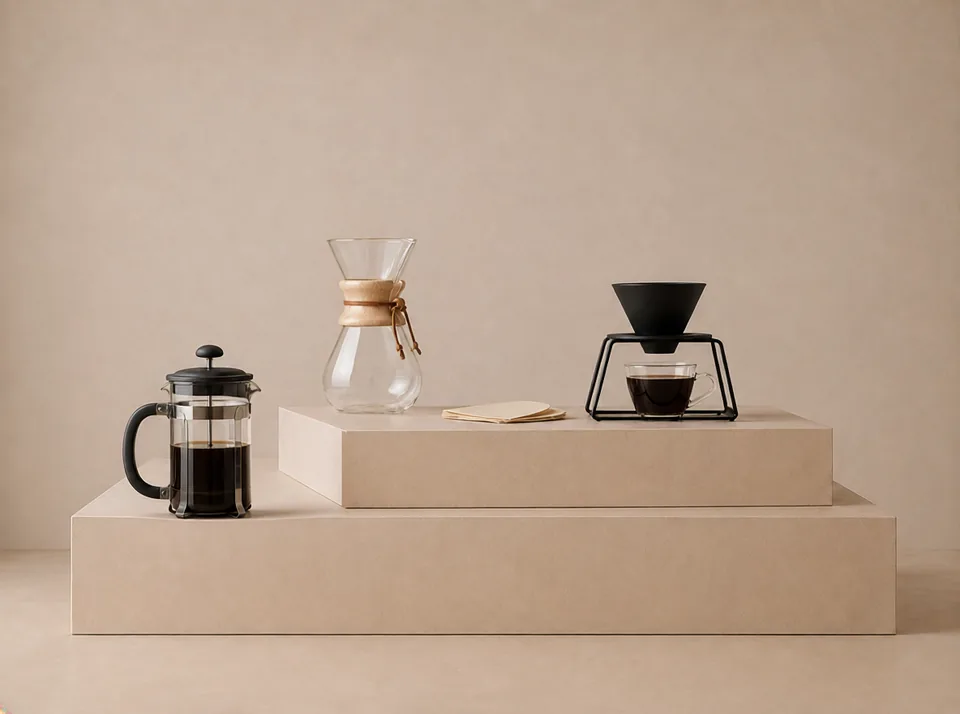
V60 is a cone-shaped pour-over brewer known for its simple design and high level of control.
Brewing with a V60 lets you adjust grind size, water temperature, pouring pattern, and timing. Its paper filter typically produces a clean cup with clear flavor definition, making it well suited to people who enjoy a hands-on and repeatable brewing process.
Explore V60 if you want to refine your pouring technique and experiment with the variables that shape extraction.
Chemex
Chemex is a pour-over brewer recognized for its distinctive hourglass design and clean brewing style.
Its thicker paper filters retain more oils and fine particles than many pour-over filters, often producing a clear, smooth cup with a lighter body. The brewer also works well for preparing several cups at once and suits people who enjoy a deliberate brewing ritual.
Explore Chemex if you prefer a clean cup profile, a visually simple brewer, and the option to prepare larger servings.
French Press
French Press is an immersion brewing method known for its straightforward preparation and fuller-bodied cup.
Coffee grounds steep directly in water before a metal filter separates them from the brewed coffee. Because the filter allows more oils and fine particles into the cup than paper filtration, French Press coffee often has a heavier texture and more pronounced body.
Explore French Press if you want a simple manual method with minimal equipment and prefer a fuller, more textured cup.
More Ways to Brew
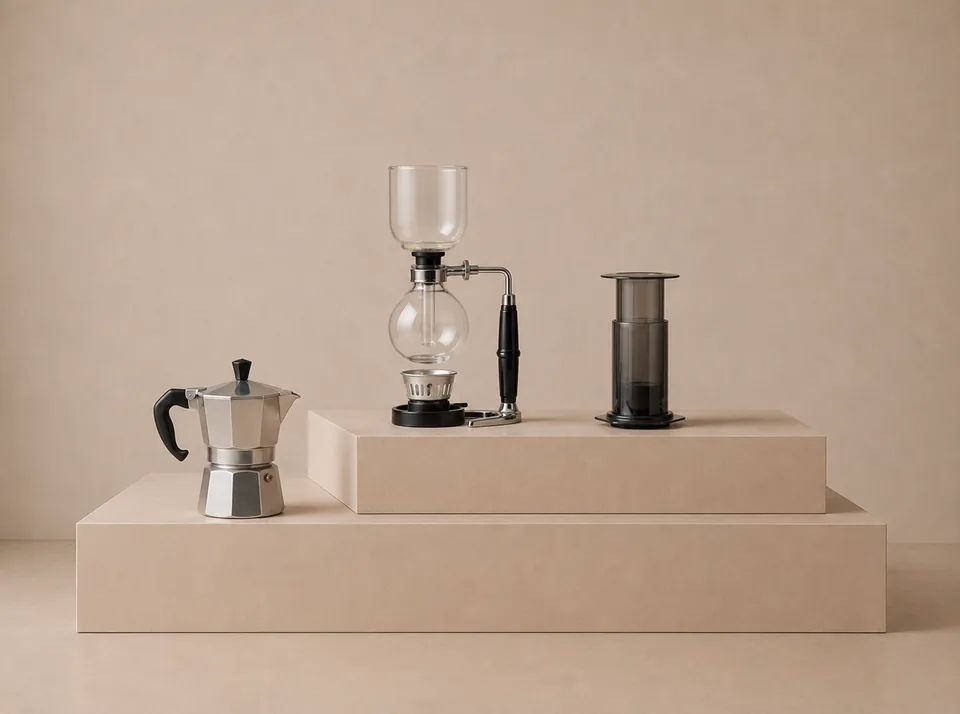
Manual brewing extends across different extraction approaches, from methods built around controlled water flow or full immersion to brewers that use heat and pressure as part of the process.
These methods offer different ways to balance concentration, clarity, technique and everyday convenience.
Moka Pot
A Moka Pot is a stovetop brewer that uses pressure created by heated water to move water through ground coffee.
It produces a concentrated, full-flavored cup that is stronger than typical filter coffee, although it does not use the pressure levels of an espresso machine. Brewing involves managing the coffee dose, grind, water level and heat rather than controlling a manual pour.
A Moka Pot can suit routines where a compact stovetop brewer and a concentrated coffee style are more important than the clarity associated with paper-filtered brewing.
AeroPress
AeroPress is a compact manual brewer that combines steeping with pressure applied by a plunger.
Its flexible design allows changes to grind size, coffee-to-water ratio, steeping time and brewing technique, making it possible to prepare cups with different strengths and profiles. Paper filtration typically keeps sediment low, while the short workflow can make the brewer practical for everyday use.
AeroPress can suit people who want a compact brewer with room to experiment without requiring the controlled pouring technique of traditional pour-over.
Siphon
A Siphon brewer uses changes in vapor pressure and vacuum to move water between two chambers during brewing.
Coffee and water mix in the upper chamber before the brewed coffee is drawn back through a filter as the lower chamber cools. The method combines immersion with filtration and requires closer attention to heat, timing and setup than many simpler manual brewers.
Siphon brewing can make sense for people who value an involved preparation process and enjoy the technique of brewing as much as everyday convenience.
Before Choosing a Brewing Method
Choosing a brewing method is easier when you compare what changes in the cup and what the method asks from you during preparation.
Rather than looking for one method that is universally better, consider the cup style you prefer, how involved you want the process to be, the time available in your routine and the equipment the method requires.
Cup Style and Body
Brewing methods can emphasize different combinations of clarity, body, texture and concentration.
Paper filtration often reduces oils and fine particles in the finished cup, while metal-filtered or less heavily filtered methods can retain more texture. Some brewing approaches also produce a more concentrated cup than conventional filter brewing.
Think about whether you generally prefer a clean and clearly defined cup, more body and texture, or greater concentration. This gives you a useful starting point before comparing individual brewers.
Level of Involvement
The amount of active control required during brewing varies considerably between methods.
Some approaches ask you to manage pouring, flow and timing throughout the brew. Others rely more on steeping time, heat management or a final pressing step.
More control can create room for adjustment, but it also adds decisions to the routine. Choose a level of involvement that you will realistically enjoy and repeat.
Time and Daily Routine
Total brewing time does not always show how demanding a method feels in everyday use.
One brewer may require several minutes of continuous attention, while another can spend much of its brewing time steeping with little intervention. Setup, cleanup and repeated batches also affect the overall workflow.
Consider how much active attention you want to give each brew, especially if coffee preparation needs to fit into a busy daily routine.
Equipment and Setup
Different brewing methods depend on different combinations of equipment and consumables.
A pour-over setup may benefit from controlled pouring and paper filters, a Moka Pot requires a suitable heat source, and other methods may introduce their own filters, brewer components or cleaning steps.
Consider the grinder, kettle, scale, filters, heat source, storage space and cleaning requirements that accompany the brewer rather than evaluating the brewer alone.
As an Amazon Associate I earn from qualifying purchases.
For Lower-Cost Everyday Moka
Primula Classic 6-Cup
- 6-cup capacity
- Simple stovetop brewing
- Budget-friendly classic
For Small Batches / Classic Italian Moka
Bialetti Moka Express 3-Cup
- Made in Italy
- 3-cup capacity
- Classic moka design
For Induction Cooktops
Bialetti Venus 6-Cup
- Works on induction
- Stainless steel body
- 6-cup capacity
For Everyday Brewing
AeroPress Original
- Fast two-minute brew
- Compact and portable
- Easy cleanup
For Travel
AeroPress Go
- Travel mug included
- Packs into included mug
- 2-minute brew & clean
Featured Brewing Guides
These guides go deeper into brewing-method selection and the practical differences that can affect everyday use.
Use them when you want more detailed guidance on choosing a brewer rather than a general introduction to how the method works.
How to Choose a Moka Pot
Learn how Moka Pot size, materials, heat-source compatibility and everyday workflow affect which brewer makes sense for your setup.
The guide also explains the practical trade-offs between different Moka Pot designs so you can choose around the way you actually plan to brew.
How to Choose an AeroPress
Understand the AeroPress brewing system and the practical differences that matter when choosing a setup.
The guide looks at format, capacity, portability, filters and everyday workflow to help you decide whether an AeroPress fits the way you prepare coffee.
Brewing Comparisons
Brewing methods can produce very different experiences even when they appear to serve a similar purpose.
The comparisons below focus on the practical trade-offs that matter when choosing between approaches, including extraction, cup profile, equipment, workflow and the amount of control involved.
Moka Pot vs Espresso
Moka Pot and espresso both produce concentrated coffee, but they use very different brewing systems.
A Moka Pot uses pressure generated as water heats on the stovetop. An espresso machine forces hot water through finely ground coffee at substantially higher pressure, creating a different extraction process and allowing espresso to develop the concentrated texture and crema associated with the method.
A Moka Pot requires less specialized equipment and can provide a strong, concentrated cup from a compact stovetop brewer. Espresso offers a different level of concentration, texture and control, but requires an espresso machine and a more demanding preparation setup.
Choose between them based on the coffee style you want, the equipment you are prepared to use and how involved you want the preparation process to be.
AeroPress vs French Press
AeroPress and French Press both allow coffee and water to steep together, but filtration and the final brewing step create different workflows and cup characteristics.
French Press typically uses a metal filter and separates the grounds by pushing a plunger through the brewed coffee. More oils and fine particles remain in the cup, contributing to its characteristic body and texture.
AeroPress uses manual pressure to push brewed coffee through a filter. With paper filtration, the resulting cup generally contains less sediment and can have a cleaner texture. Its recipes can also vary considerably in ratio, grind size and steeping time.
Choose French Press if you value a straightforward immersion routine and a fuller, more textured cup. Consider AeroPress if you want a compact brewer with greater recipe flexibility and a cleaner filtered result.
Moka Pot vs AeroPress
Moka Pot and AeroPress are both compact manual brewers, but they rely on very different brewing systems.
A Moka Pot uses stovetop heat to generate pressure and works within a relatively fixed brewing structure. AeroPress uses separately heated water, immersion and manual pressing, allowing greater flexibility in contact time, filtration and final concentration.
Choose between them based on whether you prefer a defined stovetop routine or a more adaptable brewing method that is easier to use across different locations and recipes.
AeroPress vs Pour Over
AeroPress and pour-over brewing both offer manual control, but they place that control in different parts of the process.
Pour-over depends on how water moves through the coffee bed, making pouring technique, flow rate and timing central to extraction. AeroPress combines immersion, filtration and manual pressure inside a compact brewing chamber.
Choose between them based on whether you want to refine water-flow technique or prefer a more flexible chamber-based method with fewer demands on directional pouring.
FAQ
There is no single brewing method that is best for every beginner.
A straightforward immersion brewer can reduce the amount of active technique required, while methods such as pour-over offer more direct control and can appeal to people who want to learn by adjusting variables.
Start with the cup style you enjoy and the amount of involvement you want rather than assuming that the simplest or most advanced brewer is automatically the right choice.
The main difference is how water interacts with the coffee during extraction.
Pour-over moves water through a coffee bed, while immersion keeps the grounds in contact with the brewing water for a defined period. Some brewers also use pressure as part of moving water through the coffee or separating the brewed coffee from the grounds.
Individual brewers can combine elements of more than one approach, so the brewing method, filtration system and final cup profile should be considered together.
A Moka Pot makes concentrated coffee, but it does not brew espresso in the same way as an espresso machine.
Both systems use pressure, but an espresso machine operates at substantially higher brewing pressure and uses a different extraction process. A Moka Pot is better understood as its own stovetop brewing method rather than a substitute that produces identical espresso.
If you are considering this brewing style, the How to Choose a Moka Pot guide explains the practical factors to compare before choosing a brewer.
No. Although both can include an immersion stage, their filtration and brewing workflows are different.
French Press commonly uses a metal filter and produces a cup with more oils, fine particles and texture. AeroPress uses a plunger to apply pressure and can use paper filtration for a cleaner result, while also allowing substantial variation in recipes and brewing ratios.
The How to Choose an AeroPress guide covers the system and the practical considerations involved in choosing an AeroPress setup.
The equipment depends on the brewing method.
Most methods require coffee, hot water and a suitable brewer, but filters, kettle type, grinder requirements, scales, heat sources and other supporting tools vary. Pour-over can benefit from controlled pouring, while a Moka Pot needs a compatible heat source and methods such as Siphon introduce a more specialized setup.
Choose supporting equipment around the brewer you actually use rather than assuming every manual brewing setup needs the same collection of tools.