
Milk frothers introduce air into milk to create foam and a smoother, more textured finish for cappuccinos, lattes and other milk-based coffee drinks. Some models also heat the milk, while handheld and manual options usually require it to be warmed separately.
They can complement a range of coffee setups, including espresso machines, drip coffee makers and capsule coffee systems. The main differences are how each frother is powered, whether it heats as well as froths, how much control it provides and how much cleaning it requires.
Choosing the right milk frother depends on the drinks you prepare most often, the milk texture you prefer and whether you value speed, portability or hands-on control.
Explore Milk Frother Types
Electric Jug Milk Frothers
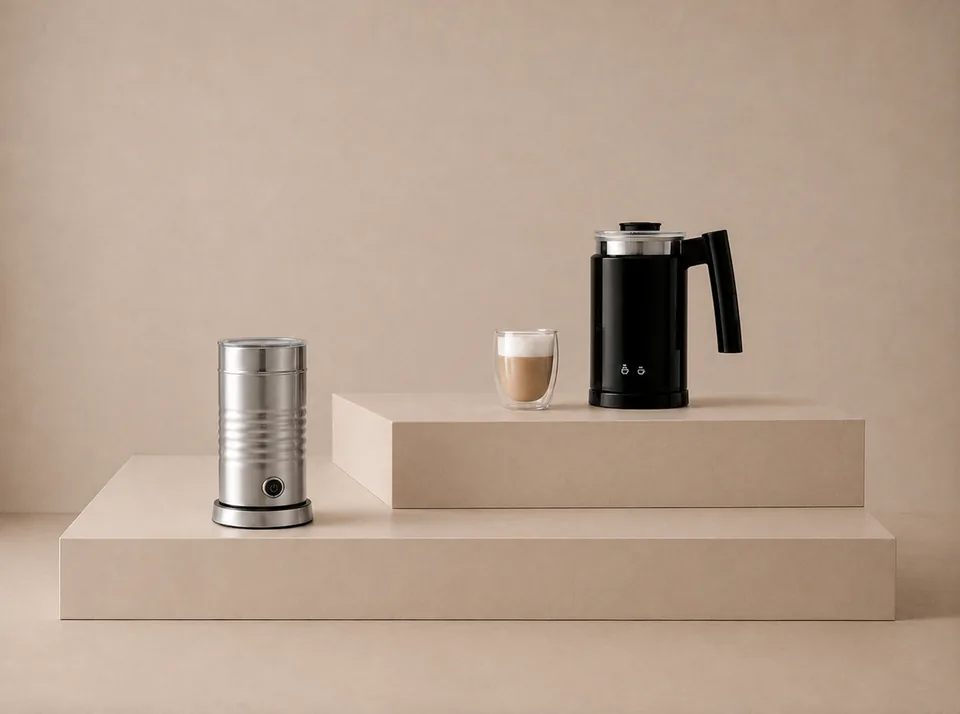
Electric jug milk frothers heat and aerate milk automatically in a single container. Depending on the model, they may offer separate settings for hot foam, cold foam or heated milk without foam.
They suit users who prepare milk-based drinks regularly and want repeatable results with minimal hands-on work. Capacity, available foam settings and cleaning requirements are the main points to compare.
Manual Pump Milk Frothers
Manual pump milk frothers use a hand-operated plunger to introduce air into warm or cold milk and create foam. They do not heat the milk, so any warming must be done separately.
They offer an electricity-free option and greater hands-on control, although the result depends more heavily on pumping technique and milk choice. They suit users who value simplicity and do not mind a more involved preparation process.
Handheld Electric Milk Frothers
Handheld electric milk frothers use a small motorized whisk to aerate milk directly in a cup or separate container. They are compact and easy to store, but they do not heat the milk and generally provide less control over foam consistency than automatic jug models.
They suit users who want a portable addition to an existing coffee setup and are comfortable heating the milk separately.
Steam Wand Systems
Steam wand systems use pressurized steam to heat and aerate milk at the same time, allowing greater control over temperature and texture. They are most commonly built into espresso machines, although standalone steam frothers are also available.
They suit users who regularly prepare espresso-based milk drinks and are willing to learn the technique required for consistent microfoam. Compared with automatic frothers, they provide more control but require more practice and immediate cleaning after use.
How to Choose a Milk Frother
Choosing a milk frother depends on the coffee drinks you enjoy, how often you prepare them and how much control you want over the milk preparation process.
The right option should suit your routine while making milk-based drinks easier and more consistent to prepare.
Coffee Drinks You Prepare
The drinks you usually make should guide your choice of milk frother.
Some users prepare milk-based drinks only occasionally, while others regularly make cappuccinos, lattes or other espresso-based milk drinks.
Consider:
- How often you prepare milk-based drinks
- Whether you mainly make espresso-based beverages
- Whether you need a simple frothing tool or a more complete milk-heating and frothing system
Choosing based on your actual habits helps you avoid adding equipment that you are unlikely to use regularly.
Convenience and Routine
Milk frothers offer different levels of convenience depending on their design.
Some options simplify the process by heating and frothing milk automatically, while others require more involvement from the user.
Consider your daily routine:
- Do you want quick preparation in the morning?
- Do you prefer to froth the milk yourself?
- How much additional preparation time are you comfortable with?
A suitable milk frother should support your routine rather than make it more complicated.
Texture and Control
Milk frothing methods vary in how much control they provide over foam texture and consistency.
Some users prefer repeatable results with minimal effort, while others enjoy adjusting the process to create a specific texture for each drink.
Consider whether you value:
- Simplicity and repeatability
- Hands-on control during preparation
- The ability to create different milk textures for different drinks
The right choice depends on how much control you want and how willing you are to practise the frothing process.
Space and Maintenance
A milk frother should fit comfortably into your coffee setup and be practical to clean after regular use.
Consider:
- Available countertop space
- Storage requirements
- The cleaning process
- Frequency of use
A compact, easy-to-store option may be more practical for a small coffee corner, while an electric jug or steam-based system may suit a dedicated setup with more available space.
Before Choosing a Milk Frother
Before choosing a milk frother, compare how the main options handle heating, frothing, texture control and integration with your coffee setup.
Some work as compact standalone tools, while others automate both heating and frothing or are built into an espresso or automatic coffee machine. The right choice depends on whether you prioritize convenience, portability, hands-on control or an integrated workflow.
Electric Jug Milk Frother vs Steam Wand
Electric jug milk frothers and steam wands both heat and aerate milk, but they provide very different levels of automation and control.
Electric jug frothers handle most of the process automatically. They suit users who want repeatable results with minimal technique and may offer settings for hot foam, cold foam or heated milk.
Steam wands use pressurized steam to heat and texture milk directly. They are usually built into espresso machines and can create fine microfoam, but consistent results require practice and immediate cleaning after use.
Choose based on your priorities:
- Choose an electric jug milk frother if convenience, repeatability and low-effort preparation matter most.
- Choose a steam wand if you already use an espresso machine and want greater control over milk texture.
Handheld Milk Frother vs Electric Jug Milk Frother
Handheld and electric jug milk frothers differ mainly in heating, automation and storage requirements.
A handheld frother uses a small motorized whisk to aerate milk in a separate cup or pitcher. It is compact and easy to store, but it does not heat the milk and requires more manual involvement.
An electric jug frother can heat and froth milk automatically in one container, making it better suited to frequent use and repeatable preparation.
Consider your routine:
- Choose a handheld frother if portability, compact storage and a simple way to add foam are your priorities.
- Choose an electric jug milk frother if you want automated heating and more consistent results.
Standalone Milk Frother vs Built-In Milk System
Standalone milk frothers and built-in milk systems differ in flexibility, integration and maintenance.
A standalone frother can be added to an existing coffee setup and stored, replaced or upgraded independently. Depending on the type, it may heat and froth milk automatically or only aerate it.
A built-in milk system is integrated into an automatic or espresso coffee machine and can provide a more unified preparation workflow. It may require more involved cleaning and ties milk preparation to the coffee machine itself.
The choice depends on your setup:
- Choose a standalone milk frother if flexibility, easier replacement and compatibility with different coffee makers are important.
- Choose a built-in milk system if you regularly prepare milk-based drinks and prefer a more integrated workflow.
As an Amazon Associate I earn from qualifying purchases.
For Lower-Cost Everyday Frothing
Zulay Kitchen Z1 Frother
- Handheld and compact
- Fast everyday frothing
- Battery powered
For Hot & Cold Automatic Frothing
SIMPLETASTE 4-in-1 Milk Frother
- Hot or cold foam
- Warms milk too
- One-button operation
For Milk Steaming & Latte Art
Adorever 12 oz Frothing Pitcher
- 12 oz steaming size
- Stainless steel pitcher
- Latte-art pen included
Featured Milk Frother Guides
Milk frothers can add variety to a home coffee routine by making milk-based drinks easier to prepare.
These guides explore the different approaches to milk preparation and how to choose a setup that matches your habits.
How to Choose a Milk Frother
A guide to milk frother types, convenience features and the key factors to consider when choosing the right option for your coffee routine.
Milk Frothing Basics
A guide to creating textured milk and understanding how different frothing methods affect foam consistency, drink texture and preparation.
Milk Frother Features Explained
A guide to milk frother features, from heating and frothing settings to capacity, controls and cleaning, and what they mean for everyday use.
Understanding Milk Frothing Methods
Comparing milk frothing methods can make it easier to understand what each option actually does and how it fits into your coffee routine.
Milk Frother vs Milk Steamer
The terms milk frother and milk steamer are sometimes used interchangeably, but they do not always describe the same process.
A milk frother primarily adds air to milk. Depending on the device, this can create anything from a noticeable layer of foam to a finer, more evenly distributed texture. Handheld frothers usually focus on aeration, while many electric jug frothers can heat and froth the milk during the same cycle.
A milk steamer uses steam to heat the milk while also allowing air to be introduced. With a steam wand, the way the milk is positioned and moved helps determine how much air enters and how evenly it becomes distributed. When the bubbles become very small and the milk develops a smoother, more integrated texture, this is commonly described as microfoam. Steam wands can produce this texture, although the result depends on the equipment and how the milk is handled.
The distinction is not always as simple as “frothing adds air, steaming adds heat.” Some electric frothers heat and aerate automatically, while some steam systems can also control temperature and texture automatically. The categories can therefore overlap in what they produce even though they use different methods to get there.
For everyday use, think less about the product name and more about the process you want. A simple frother may suit a routine where you mainly want to add foam to milk. An electric jug can combine heating and frothing with relatively little involvement. A steam wand makes milk preparation part of the coffee-making process itself and, depending on the system, can offer more direct control over the finished texture.
The useful question is not which method is universally better. It is whether you want milk preparation to be a quick separate step, an automatic heating-and-frothing cycle, or a more hands-on part of making the drink.
FAQ
A milk frother is not essential for every home coffee setup. It is most useful if you regularly prepare cappuccinos, lattes or other milk-based drinks and your coffee machine does not already include a steam wand or built-in milk system. If you mainly drink black coffee or only add a small amount of untextured milk, a separate frother may offer limited practical value.
An electric jug milk frother is generally the easiest option for users who want the milk to be heated and frothed automatically. Handheld frothers are compact and simple to operate, but they require the milk to be heated separately and provide less consistent results. The How to Choose a Milk Frother guide explains how these options differ in convenience, control and daily use.
A standalone milk frother can provide a convenient alternative to a steam wand for many home users, especially when speed and repeatability are more important than precise control. However, it may not reproduce the fine microfoam and adjustable texture that a steam wand can create with the right technique. The better option depends on the drinks you prepare and how much hands-on control you want.
Cleaning requirements depend on the frother type. Handheld whisks are usually quick to rinse, while manual pump frothers require the container, lid and filter assembly to be washed after use. Electric jug models may need more careful cleaning around the whisk and milk residue, although removable parts and non-stick interiors can make the process easier. Steam wands should be wiped and purged immediately after each use to prevent dried milk from building up.