
Small-space coffee stations are designed for homes where available room is limited but a dedicated coffee area is still useful.
A compact station can take many forms, from a countertop corner to a cabinet, shelf-based setup or movable cart.
The goal is not to build the largest setup, but to make equipment, storage and daily preparation work efficiently within the space available.
Choosing the right small-space coffee station depends on the area you can use, your coffee routine and the equipment you reach for most often.
Explore Small Space Coffee Station Ideas
Countertop Coffee Stations
Countertop coffee stations use existing counter space to create a dedicated area for daily brewing.
They are practical when you want frequently used equipment within easy reach without adding a separate cabinet, cart or piece of furniture.
Consider:
- Available counter space
- Equipment dimensions and clearance
- Storage above or below the counter
Explore countertop coffee stations if you want a simple, accessible setup that fits on an existing work surface.
Cabinet Coffee Stations
Cabinet coffee stations use an existing cabinet or a purpose-built unit to organize coffee equipment, tools and supplies.
They can reduce visible clutter and provide enclosed storage, but the cabinet must offer suitable dimensions, power access, ventilation and door clearance for the equipment used.
Consider:
- Internal dimensions and storage
- Power access and ventilation
- Daily accessibility
Explore cabinet coffee stations if organized storage and a more contained setup are priorities.
Shelf Coffee Stations
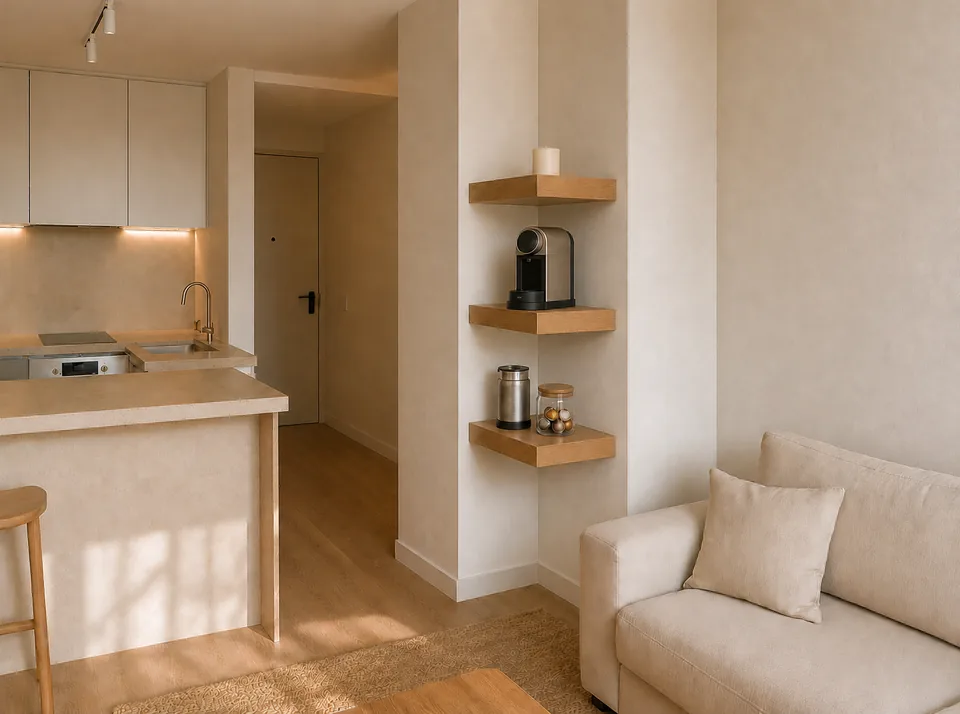
Shelf coffee stations use vertical wall space to keep coffee supplies and frequently used accessories within reach.
They are useful where floor space is limited, but shelf depth, load capacity, mounting security and item accessibility must suit what will be stored.
Consider:
- Available wall space
- Shelf depth and load capacity
- Secure mounting and accessibility
Explore shelf coffee stations if you need compact storage above or around a stable brewing surface.
Mobile Coffee Stations
Mobile coffee stations use carts or other movable units to keep equipment and supplies together while allowing the setup to be repositioned.
They are useful when the setup needs to move between locations or be stored out of the way, but the unit should remain stable and practical near a suitable power outlet.
Consider:
- Cart dimensions and mobility
- Storage and load capacity
- Wheel locks and outlet access
Explore mobile coffee stations if you need a flexible setup that can move with your routine.
How to Choose a Small Space Coffee Station
Choosing a small-space coffee station starts with understanding how much usable room you have and how you prepare coffee each day.
The most effective setup balances equipment dimensions, accessible storage and a practical workflow without crowding the surrounding area.
Available Space
Start by measuring the full usable area rather than considering only the visible work surface.
Consider:
- Counter width, depth and height
- Wall space and vertical clearance
- Furniture, drawer and door clearances
- Safe movement around the station
A well-planned coffee station should fit naturally into the room without obstructing nearby cabinets, appliances or walkways.
Essential Equipment
In a limited area, every item should have a clear purpose. Prioritize the equipment you use regularly and consider how much space each piece requires during operation, not only when stored.
Consider:
- Coffee machine or manual brewer
- Grinder
- Kettle and essential brewing tools
- Frequently used storage containers
Allow enough clearance for water tanks, lids, handles, steam wands and power cords where relevant. Occasional-use equipment can be stored elsewhere if it interferes with the daily setup.
Storage Solutions
Storage should keep frequently used items accessible while reducing clutter on the main preparation surface.
Consider:
- Wall-mounted or vertical storage
- Drawers and cabinet organizers
- Stackable or compact containers
- Multi-purpose furniture with enclosed storage
Choose each storage solution according to item weight, access frequency and available clearance. Heavy equipment should remain on a stable surface rather than on lightly mounted shelves.
Daily Workflow
Arrange the station according to the order in which you normally prepare coffee, from accessing beans and water to brewing, serving and cleaning.
Consider:
- Where coffee, filters and other supplies are stored
- How water reaches the brewer
- Where grinding and preparation take place
- Where used tools and cleaning supplies are kept
A practical layout reduces unnecessary movement, keeps frequently used items within reach and makes routine cleanup easier.
Before Creating a Small Space Coffee Station
Before creating a small-space coffee station, compare how different layouts and storage approaches affect accessibility, organization and daily workflow.
A successful compact setup does not fit the most equipment into the smallest area. It keeps frequently used items accessible while allowing the station to function without crowding the surrounding space.
Countertop vs Cabinet Coffee Station
Countertop and cabinet coffee stations use limited space in different ways.
A countertop station keeps equipment visible and immediately accessible on an existing work surface. It suits frequent use and requires no separate cabinet or furniture, but it permanently occupies counter space.
A cabinet station places equipment and supplies within an enclosed or purpose-built unit. It can reduce visible clutter and provide organized storage, but it requires suitable internal dimensions, power access, ventilation and door clearance.
Consider your priorities:
Choose a countertop setup if immediate access and simplicity are most important.
Choose a cabinet setup if enclosed storage and a more contained appearance are priorities.
Small Space Coffee Station vs Dedicated Coffee Bar
A small-space coffee station and a dedicated coffee bar differ mainly in how much room is permanently assigned to coffee preparation.
A small-space station fits into an existing counter, cabinet, shelf arrangement or movable cart. It prioritizes a compact footprint and integrates coffee preparation into a shared area.
A dedicated coffee bar creates a more clearly defined zone for equipment, storage and serving. It may provide more working surface and capacity, but it also requires an area that can remain permanently assigned to the setup.
Choose a dedicated coffee bar if you can reserve a defined area and need room for a broader range of equipment or supplies.
Choose a small-space coffee station if the setup must function efficiently within a compact or shared area.
Open Shelving vs Closed Storage for a Coffee Station
Open shelving and closed storage offer different balances of visibility, accessibility and organization within a coffee station.
Open shelving keeps frequently used items visible and easy to reach while making use of vertical space. However, exposed items require more regular cleaning and careful organization.
Closed storage reduces visual clutter and protects supplies from dust when they are not in use. It may provide less immediate access, and cabinet dimensions must suit the items stored inside.
Consider:
- How often each item is used
- How much of the setup should remain visible
- Shelf depth, load capacity and cabinet clearance
- The amount of regular cleaning and organization required
A combination of both approaches often works well: frequently used items can remain accessible, while occasional-use supplies stay behind closed doors.
Featured Small Space Coffee Station Guides
Creating a coffee station when space is limited requires careful planning, realistic equipment choices and efficient use of the available area.
These guides cover practical ways to plan, organize and create a functional coffee setup without requiring a large permanent footprint.
Small Space Coffee Setup Ideas
Practical ideas for creating coffee stations in apartments and compact homes through efficient layouts, accessible storage and careful space planning.
Coffee Station Organization Guide
A practical guide to arranging coffee equipment, supplies and storage so that frequently used items remain accessible and the daily workflow stays organized.
How to Create a Home Coffee Station
A step-by-step guide to choosing a suitable location, planning equipment and storage, and creating a practical coffee station within your home.
FAQ
Yes. A coffee station can work in a small apartment when it uses an existing countertop, cabinet, shelf system or compact cart rather than requiring a large dedicated unit. Start by measuring the usable surface and vertical clearance, then check outlet access and the operating space required by your brewer. For practical layout examples, explore Small Space Coffee Setup Ideas.
Include only the equipment that supports your normal brewing routine. Most setups need a coffee machine or manual brewer, coffee and the appropriate filters or capsules, mugs and basic cleaning supplies. Add a grinder, kettle, scale or milk frother only when your brewing method requires them and the station has enough stable surface area, clearance and storage. Coffee Station Essentials: What to Include in Your Setup covers the core equipment and supplies to consider when planning your station.
Keep the brewer on a stable work surface and arrange supplies in the order you use them. Store daily items within easy reach, use shelves or wall storage for lightweight accessories, and move occasional-use items into drawers or cabinets. Avoid placing heavy equipment on lightly mounted shelves or crowding appliances that generate heat or steam. The Coffee Station Organization Guide provides a more detailed workflow-based approach.
No. You can use an existing countertop, cabinet or sturdy piece of furniture if it provides adequate depth, load capacity, heat and moisture resistance, and suitable access to power. Special furniture is useful only when you need hidden storage, mobility or a custom fit for the available area. The Countertop vs Cabinet Coffee Station comparison can help you choose between two of the most common approaches.