
Coffee tools support the practical steps around brewing, from grinding and water preparation to espresso setup, measuring, milk preparation and routine cleaning.
Some tools directly influence preparation, while others improve consistency, workflow or ease of use. Their value depends on the brewing method, equipment and routine they are used with.
Explore the main tool categories and everyday coffee tools below to understand where each one fits and which options are relevant to your setup.
Explore Coffee Tools
Grinders
Coffee grinders let you adjust grind size for different brewing methods and prepare coffee shortly before brewing.
Grinder design, adjustment range and consistency can affect both preparation and workflow, particularly when switching between espresso, filter and immersion methods.
Explore grinders to understand the main designs and choose a grinder that suits your brewing methods and preferred level of control.
Kettles
Coffee kettles heat and deliver brewing water, with different designs offering different levels of temperature and pouring control.
Features such as spout style, temperature adjustment, capacity and heating method matter differently depending on how you brew.
Explore kettles to compare the main options and identify the features that fit your brewing routine.
Milk Frothers
Milk frothers aerate milk to create foam and, depending on the design, may also heat it.
Different frothing methods vary in texture, capacity, control and cleaning requirements, making them suitable for different drinks and routines.
Explore milk frothers to understand the main types and choose an approach that suits the milk-based drinks you prepare.
Everyday Coffee Tools
Coffee preparation often involves smaller tools that work alongside the brewer, coffee machine or grinder.
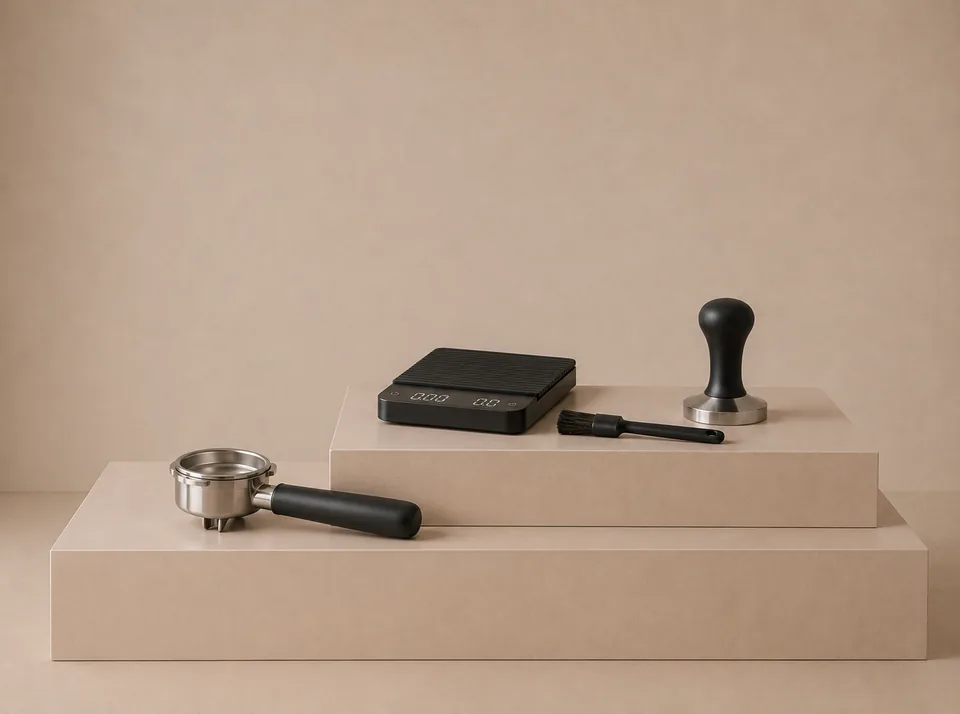
Portafilters and tampers support espresso preparation, scales help measure coffee and water consistently, and brushes make it easier to remove loose grounds and residue from frequently used equipment.
Understanding the role of each tool makes it easier to decide whether it belongs in your own setup.
Portafilters
A portafilter holds the filter basket and ground coffee during espresso preparation and connects directly to the espresso machine’s group head.
Portafilters vary in size, basket configuration and design. Pressurized and non-pressurized systems also manage brewing pressure differently, which can affect how much control the user has over puck preparation and extraction.
Compatibility with the espresso machine is essential, since portafilters are not universally interchangeable.
Coffee Tampers
A coffee tamper compresses ground coffee inside an espresso basket before brewing.
An even, stable coffee bed helps create a more repeatable starting point for espresso extraction. Tamper diameter, base design and fit within the basket can influence how comfortably and consistently this step is performed.
The appropriate tamper depends primarily on the basket being used and the espresso workflow around it.
Coffee Scales
A coffee scale measures coffee and water during preparation, helping you repeat recipes with greater consistency.
Depending on the brewing method, a scale may be used to measure the coffee dose, brewing water or final espresso yield. Some models also include timers or faster response rates for workflows where weight changes need to be followed closely.
The useful level of precision depends on how you brew and what you want to measure.
Coffee Brushes
Coffee brushes help remove loose grounds and residue from grinders, espresso equipment and preparation surfaces.
Brush shape, bristle design and size affect where a brush can reach and which cleaning tasks it handles comfortably. Some are intended for general cleanup, while narrower designs can be more useful around grinder chutes, baskets or other confined areas.
A brush is most useful when its design matches the equipment and areas you clean regularly.
Before Choosing Coffee Tools
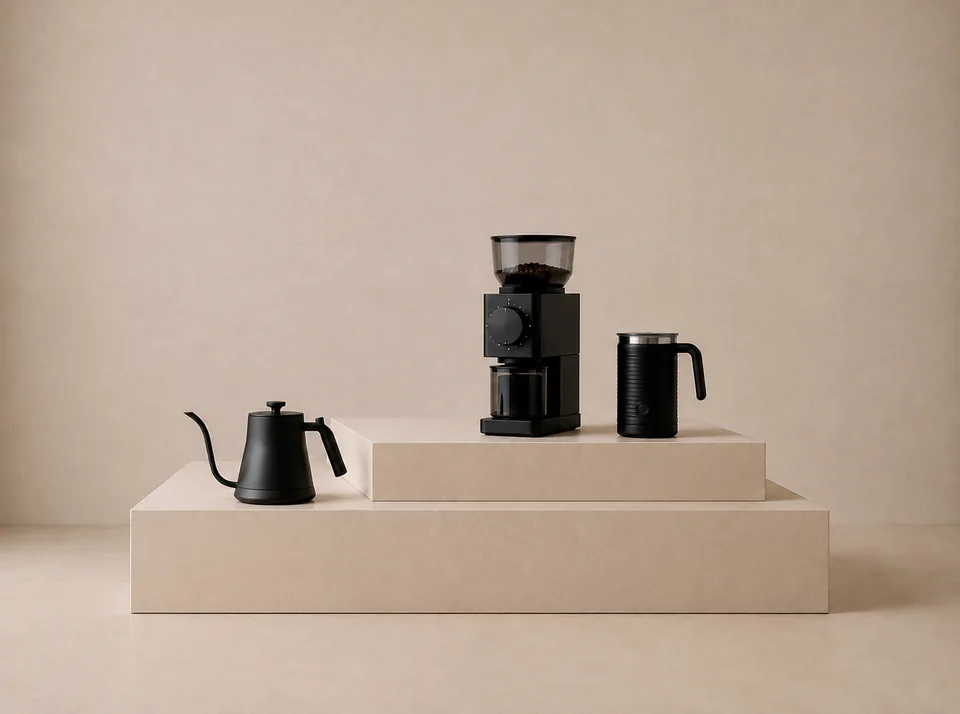
Coffee tools work as part of a larger setup rather than in isolation. Before choosing one, consider how it fits your existing equipment, what part of the preparation process it supports and whether its features will make a practical difference in regular use.
Four factors are particularly useful when narrowing down the options.
Compatibility and Fit
Check how the tool works with the equipment you already use.
Dimensions, connection systems and component sizes can matter with tools such as portafilters and tampers, while other tools may need enough capacity or working space for your usual preparation.
A feature is only useful when the tool can function properly within the existing setup.
Precision and Repeatability
Consider whether greater measurement or preparation precision will meaningfully support the way you brew.
A scale can make coffee-to-water ratios or espresso yields easier to repeat, while a well-fitting tamper can support a more consistent preparation routine.
More precision can be useful, but not every workflow requires the same level of measurement or adjustment.
Workflow and Frequency of Use
Think about where the tool enters your routine and how often you will actually use it.
Frequently used tools benefit from straightforward handling, convenient placement and a design that does not add unnecessary steps. A specialized tool used only occasionally may justify less space or complexity.
Choose around your normal routine rather than an idealized setup.
Cleaning and Maintenance
Coffee grounds, oils, milk residue and water deposits can make cleaning part of the everyday workflow.
Consider how easily a tool itself can be cleaned, whether it creates additional maintenance and whether it helps you reach areas that require regular attention.
A practical tool should support the routine without making maintenance disproportionately complicated.
As an Amazon Associate I earn from qualifying purchases.
For Breville 54mm Baskets / Consistent Tamping
Normcore V4 53.3 mm Tamper
- Fits Breville 54 mm
- Self-leveling design
- Consistent spring pressure
For 58mm Espresso Setups
Normcore V4 58.5 mm Tamper
- For 58 mm baskets
- Self-leveling design
- Consistent spring pressure
For 51mm Espresso Setups
Reoszeank 51 mm Tamper Kit
- Fits 51 mm machines
- Tamper plus distributor
- Dosing funnel included
For Breville 54mm Setups
Normcore 54 mm Bottomless Portafilter
- Fits Breville 54 mm
- Bottomless shot view
- 18 g basket included
For CASABREWS 51mm Setups
Fogkay 51 mm Bottomless Portafilter
- Fits CASABREWS 51 mm
- Bottomless shot view
- Puck screen included
For Gaggia 58mm Setups
Normcore 58 mm Bottomless Portafilter
- Fits select Gaggia machines
- Bottomless shot view
- 18 g basket included
For Espresso Precision
Maestri House S2
- 0.1 g precision
- Auto/manual timer
- 4.13-inch square footprint
For Pour-Over & Larger Brewing
Greater Goods Coffee Scale with Timer
- 0.1 g precision
- Built-in timer
- Large 6.6 lb capacity
For Single-Dose Espresso Workflow
Subminimal SubScale
- Scale built into cup
- Weigh and pour directly
- LED display
For Everyday Espresso Shots
Qipecedm 4 oz Double-Spout Cups
- Two 4 oz cups
- Double-spout pouring
- Easy-grip handles
For Measuring & Pouring
TIWPAJS 6 oz Measuring Cup
- 6 oz capacity
- Measurement markings
- V-shaped pouring spout
For Multi-Size Measuring
Ackers 4-Piece Measuring Set
- Four nesting sizes
- 5–60 ml range
- Multiple measurement units
For Everyday Grinder Cleaning
Natural Bristle Grinder Brush
- Natural bristles
- Cleans loose coffee grounds
- Comfortable wood handle
For Espresso Machine Cleaning
Number-One Coffee Machine Brush
- Made for group heads
- Two brushes included
- Reaches tight machine areas
For Espresso Prep & Counter Protection
Normcore Tamping Mat
- Protects the counter
- Non-slip rubber surface
- Water and heat resistant
For Everyday Espresso Cleanup
Ninja Luxe Café Knock Box
- Holds about 10 pucks
- Compact counter footprint
- Easy puck disposal
Featured Coffee Tool Guides
Choosing between similar coffee tools often requires more detail than a category overview can provide.
These guides examine compatibility, design differences, practical features and everyday trade-offs to help you identify which type of tool makes sense for your equipment and preparation routine.
How to Choose a Portafilter
Understand portafilter compatibility, basket configurations and the practical differences between common designs.
This guide explains what to check before choosing a portafilter and how machine fit, brewing approach and workflow affect the decision.
How to Choose a Coffee Tamper
Learn how tamper size, basket fit, base design and handling affect espresso preparation.
This guide explains the main features to compare and how to choose a tamper that works naturally with your basket and preparation routine.
How to Choose a Coffee Scale
Understand how capacity, resolution, response time, timer functions and physical size affect coffee measurement.
This guide explains which features matter for different brewing workflows and when coffee-specific scale features are genuinely useful.
How to Choose a Coffee Brush
Compare brush shapes, bristle designs and intended cleaning tasks for different parts of a coffee setup.
This guide explains how to choose a brush according to the equipment you clean, the areas you need to reach and your regular maintenance routine.
Coffee Tool Comparisons
Similar-looking tools can behave differently once they become part of an actual brewing routine.
The comparisons below focus on two decisions where differences in design and intended use can meaningfully affect preparation.
Pressurized vs Non-Pressurized Portafilters
Pressurized and non-pressurized portafilter systems differ in how they create resistance during espresso brewing and in how much the result depends on coffee preparation.
A pressurized system uses additional restriction to help create pressure during brewing. This can make it more forgiving of variations in grind and puck preparation, but it gives the user less direct control over how those variables shape extraction.
A non-pressurized system relies more heavily on the coffee puck itself to provide resistance. It can offer greater control over espresso preparation, but grind quality, dose, distribution and tamping become more important.
Choose according to your espresso machine, grinder capability and how much control you want over the preparation process.
Coffee Scale vs Kitchen Scale
Both coffee scales and kitchen scales measure weight, but their design priorities can differ.
A general kitchen scale can be sufficient for measuring coffee beans or larger quantities of brewing water when its resolution and response are suitable for the task.
Coffee-focused scales may offer finer measurement increments, faster response, integrated timers or dimensions designed around espresso machines and manual brewers. Those features can make certain brewing workflows easier to follow, but they are not necessary for every setup.
Choose based on the measurements your brewing method requires rather than assuming a dedicated coffee scale is always necessary.
FAQ
There is no fixed set of coffee tools that every setup requires.
Start with the equipment required by your brewing method, then consider tools that solve a recurring preparation problem or make an important variable easier to control. A pour-over routine, espresso setup and milk-based drink routine can each require very different supporting tools.
Adding fewer tools that are regularly useful is generally more practical than building a setup around equipment you rarely use.
Many coffee tools are not universal.
Compatibility is particularly important with espresso equipment. Portafilter dimensions and connection systems can vary between machines, while tampers need to fit the basket they are intended to compress.
Always check the relevant dimensions and manufacturer specifications before assuming that a tool will fit existing equipment.
Not necessarily.
A kitchen scale may be adequate when it provides suitable resolution, capacity and response for the measurements you need. Coffee scales become more useful when features such as finer increments, faster response, compact dimensions or an integrated timer improve a specific brewing workflow.
The How to Choose a Coffee Scale guide explains these differences in more detail.
Not on its own.
A tool can make a variable easier to measure, control or repeat, but it still needs to suit the brewing method and be used appropriately. Compatibility, technique and the quality of the underlying equipment can matter more than adding extra features.
Choose tools according to a specific preparation need rather than treating every equipment change as an automatic upgrade.
Start with compatibility and the preparation steps your espresso machine requires.
Portafilters and tampers need to work with the machine and basket, while a suitable grinder and scale can provide greater control over dose and extraction. Cleaning tools should correspond to the parts of the setup that collect grounds or residue during regular use.
Build the setup around the actual machine and workflow rather than choosing individual tools independently.