
Coffee bars create a dedicated area for preparing, organizing, and enjoying coffee at home.
Compared with a compact coffee nook, a coffee bar usually provides more room for equipment, storage, and everyday preparation.
A coffee bar can take many forms, from a simple countertop arrangement to a freestanding unit, a storage-focused cabinet, or a larger dedicated workspace.
Choosing the right setup depends on your available space, coffee routine, storage needs, and whether you want a flexible arrangement or a more permanent feature.
Explore Coffee Bar Ideas
Countertop Coffee Bars
Countertop coffee bars use an existing work surface to create a compact, dedicated area for coffee preparation.
They work well for households that want to keep a coffee machine, grinder, and daily accessories together without adding a separate furniture unit.
Consider:
- Available counter space
- Equipment dimensions and clearance
- Nearby storage and power access
Explore countertop coffee bar ideas for small kitchens if you want an organized setup that fits into an existing layout.
Freestanding Coffee Bars
Freestanding coffee bars use a separate cabinet, cart, console, or shelving unit to create a dedicated coffee area.
Because the furniture is not built in, the setup can usually be moved, rearranged, or replaced as your space and needs change.
Consider:
- Furniture dimensions
- Storage capacity
- Room layout and traffic flow
Explore the differences between freestanding and built-in coffee bars if you are deciding between a flexible furniture-based setup and a more permanent installation.
Coffee Bar Cabinets
Coffee bar cabinets combine a preparation surface with dedicated storage in a single unit.
They can keep coffee machines, brewing tools, cups, and supplies together while helping the surrounding area remain organized and functional.
Consider:
- Storage requirements
- Equipment dimensions and clearance
- Daily accessibility
Explore how to choose a coffee bar cabinet if storage, equipment fit, and everyday access are central to your setup.
Dedicated Coffee Bar Spaces
Dedicated coffee bar spaces use a defined area of the home primarily for coffee preparation, equipment, and storage.
They may include a work surface, cabinetry, shelving, and utility access arranged around a specific coffee routine.
Consider:
- Available space
- Installation and storage needs
- Long-term use of the area
Explore how to plan a dedicated home coffee bar if you want a more permanent workspace designed around your routine.
How to Choose a Coffee Bar
Choosing a coffee bar means creating a dedicated setup that supports your daily coffee routine and fits naturally into your home.
A well-planned coffee bar balances available space, equipment placement, storage, and workflow.
Available Space
The size, location, and surrounding clearance of your coffee bar determine which type of setup will work best.
Consider:
- Available counter or floor space
- Furniture dimensions
- Wall and vertical storage space
- Movement around the area
Choose a setup that adds function without making the room feel crowded.
Equipment Setup
The size and requirements of your equipment should guide the layout of your coffee bar.
Consider:
- Coffee machine footprint and clearance
- Grinder placement
- Brewing and preparation space
- Access to power and water, where needed
Keep frequently used equipment accessible without reducing usable preparation space.
Storage and Organization
Storage should support both daily access and longer-term organization.
Consider where to keep:
- Coffee beans
- Brewing tools and filters
- Cups and serving accessories
- Cleaning supplies
- Less frequently used equipment
Keep frequently used items close to the preparation area while separating cleaning supplies from coffee, cups, and brewing tools.
Workflow
A coffee bar should follow the natural sequence of your routine, from storing ingredients to serving and cleanup.
Consider:
- Where coffee and filters are stored
- Where grinding and preparation take place
- Where brewing equipment is used
- Where finished drinks are served
- How used tools and equipment are cleaned
A clear sequence reduces unnecessary movement and makes daily coffee preparation easier.
Before Creating a Coffee Bar
Before creating a coffee bar, it helps to understand how different layouts and setup types affect the way the space functions in daily use.
A well-planned coffee bar is not defined by having more equipment or a larger footprint. It should bring preparation, storage, and workflow together in a practical area that suits your home and coffee routine.
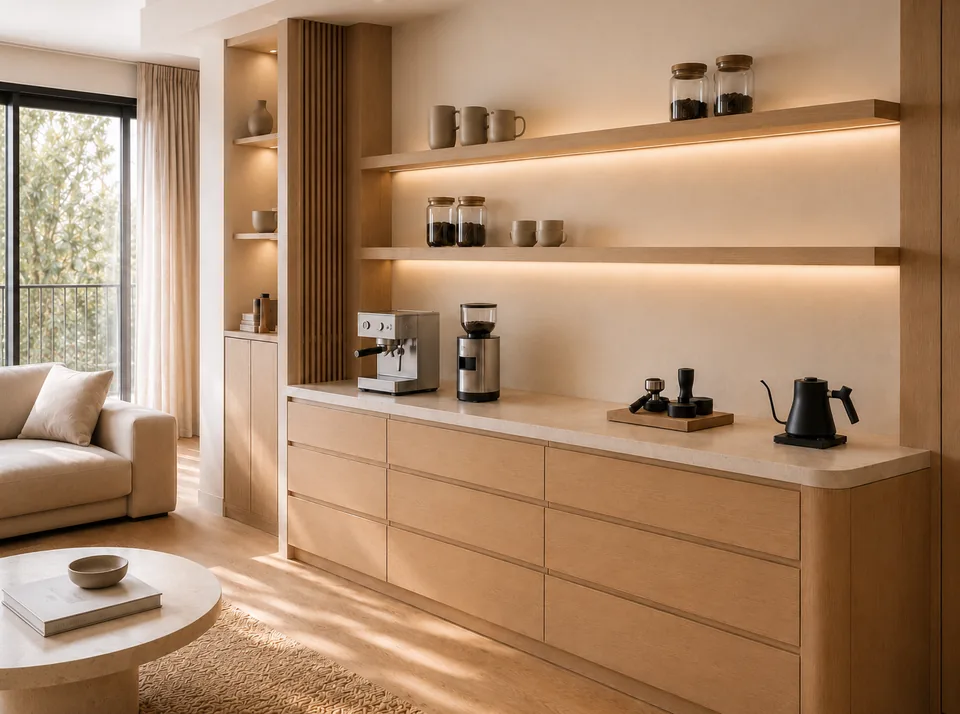
Coffee Bar vs Coffee Station
Coffee bars and coffee stations are closely related, and the terms are sometimes used interchangeably.
A coffee station can describe any organized area for preparing coffee, from a compact countertop setup to a cabinet-based arrangement.
A coffee bar usually refers to a more developed setup with dedicated preparation space, storage, and a clearer workflow.
Consider your needs:
- Choose a compact coffee station if you mainly need an organized place for everyday equipment and supplies.
- Choose a coffee bar if you want more work surface and storage for multiple tools or a more involved coffee routine.
Explore the full comparison if you are deciding how much space, storage, and structure your setup requires.
Freestanding vs Built-In Coffee Bars
Freestanding and built-in coffee bars can support similar routines, but they differ in flexibility, installation, and permanence.
Freestanding coffee bars use movable furniture such as a cabinet, cart, or console. The setup can usually be repositioned, replaced, or adapted as your needs change.
Built-in coffee bars are integrated into cabinetry, an alcove, or another fixed part of the room. They can provide a more tailored layout but require greater planning and a more permanent installation.
Consider:
- How permanent you want the setup to be
- Available floor and wall space
- Installation requirements and budget
- Equipment dimensions and storage capacity
- Whether the setup may need to move or change later
The better option depends on your space, storage needs, installation plans, and desired level of flexibility.
Small Coffee Bar vs Dedicated Home Coffee Bar
Small coffee bars and dedicated home coffee bars differ mainly in footprint, capacity, and degree of permanence.
A small coffee bar makes use of an existing countertop or a compact piece of furniture. It prioritizes essential equipment, accessible storage, and efficient use of limited space.
A dedicated home coffee bar uses a defined area primarily for coffee preparation. It can provide more work surface, storage, and room for multiple machines or brewing methods.
Consider:
- Your available space
- The amount and size of your equipment
- Your storage requirements
- How permanent you want the coffee area to be
- Whether your routine requires additional preparation space
Choose a small coffee bar for a compact and adaptable setup. Choose a dedicated home coffee bar when you need more workspace, storage, and capacity for a more extensive setup.
Featured Coffee Bar Guides
A well-designed coffee bar combines preparation, storage and organization into one practical area.
These guides explore different ways to create a coffee workspace that fits your home and routine.
How to Create a Home Coffee Bar
A guide to planning a coffee bar by considering space, equipment placement, storage, and daily workflow.
Coffee Bar Organization Guide
A guide to arranging coffee machines, brewing tools, and accessories for a more organized and efficient setup.
Coffee Bar Ideas for Different Spaces
A guide exploring coffee bar ideas for different room sizes and layouts, from compact areas to larger dedicated spaces.
FAQ
A coffee bar is a dedicated area at home that brings coffee equipment, preparation space, storage, and serving essentials together. Planning how to create a home coffee bar begins with choosing a suitable location and arranging the setup around your available space and daily routine.
No. A coffee bar can be adapted to a small section of countertop, a compact cabinet, a sideboard, or a larger dedicated area. Practical coffee bar ideas for different spaces can help you choose a layout that fits your room, equipment, and storage needs.
A home coffee bar may include a coffee machine or brewer, grinder, coffee storage, cups, filters, brewing tools, and cleaning supplies. The exact selection should reflect the brewing methods you use, your available space, and your daily routine. A home coffee bar setup checklist can help you identify the items your setup actually needs.
A kitchen counter setup describes where the coffee equipment is placed, while a coffee bar describes how the area is organized and used. A countertop setup can function as a coffee bar when it includes a defined preparation area, practical storage, and a clear workflow. A broader coffee bar vs coffee station comparison explains how these setups differ in purpose, capacity, and organization.