
Coffee cabinets help create a dedicated area for preparing coffee, organizing supplies, and storing equipment at home.
A well-planned cabinet can bring together a coffee machine, brewing tools, beans, filters, cups, and accessories while keeping the setup practical for everyday use.
From compact storage solutions to built-in coffee areas, the right cabinet style depends on the available space, the equipment you use, and how you move through your coffee routine.
Explore Coffee Cabinet Ideas
Coffee Bar Cabinets
Coffee bar cabinets combine storage and workspace in one dedicated area. They can hold a coffee machine, brewing tools, cups, and everyday accessories while keeping the setup easy to reach.
This option works well for anyone who wants a defined coffee station that still feels connected to the surrounding kitchen, dining area, or living space.
Focus:
- daily access
- equipment organization
- dedicated coffee area
Coffee Pantry
Coffee pantries prioritize storage and organization. They provide room for beans, filters, brewing equipment, cups, and additional supplies while keeping frequently used items easy to access.
They are especially useful when a coffee setup includes a larger collection of equipment or supplies that needs to stay contained in one place.
Focus:
- storage capacity
- organized supplies
- larger coffee setups
Coffee Storage Solutions
Coffee storage solutions use shelves, drawers, pull-outs, and cabinet organizers to keep equipment and supplies in order without creating a full coffee station.
They work well when storage needs to fit into an existing kitchen or multipurpose area and can be arranged around the tools used most often.
Focus:
- flexible storage
- efficient organization
- everyday accessibility
Built-in Coffee Cabinets
Built-in coffee cabinets are integrated into kitchen cabinetry or another fixed area of the home. They create a more permanent coffee setup that can be planned around the machine, storage needs, electrical access, and available workspace.
This option suits anyone who wants the coffee area to feel intentional and visually connected to the surrounding room.
Focus:
- integrated design
- long-term planning
- organized workspace
Small Coffee Cabinets
Small coffee cabinets are suited to apartments, compact kitchens, and other limited spaces. They can create a functional coffee corner without taking over a full wall or requiring a separate room.
The most effective designs prioritize essential equipment, vertical storage, and a clear preparation surface.
Focus:
- compact living
- streamlined setups
- space efficiency
How to Choose a Coffee Cabinet
Choosing a coffee cabinet depends on how you use the space, what you need to store, and how the cabinet will fit into your home.
A well-planned coffee cabinet should support your daily routine by keeping equipment, ingredients, and accessories organized, accessible, and close to the preparation area.
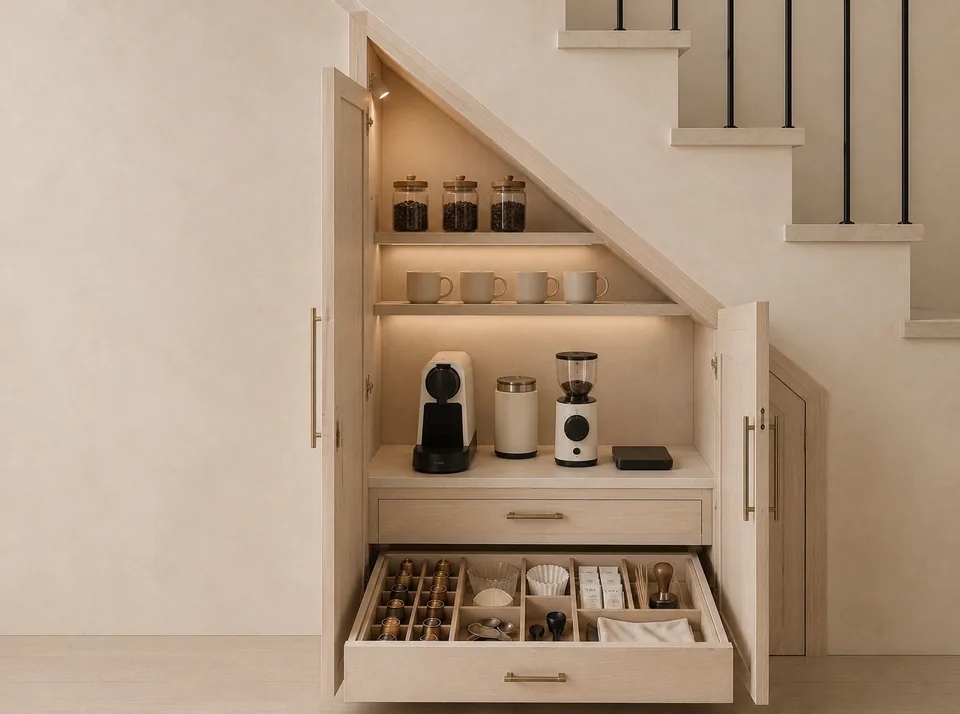
Available Space
The available space is one of the first factors to consider when planning a coffee cabinet.
Some homes can accommodate a larger dedicated coffee area, while others need a compact cabinet that fits into an existing kitchen, dining area, or unused corner.
Consider:
- available wall, floor, and countertop space
- cabinet dimensions
- access to power and a nearby preparation surface
- how the area will be used each day
The cabinet should fit naturally into the room without making the coffee setup difficult to reach or use.
Storage Needs
Coffee equipment can include machines, grinders, brewing tools, filters, beans, cups, and accessories.
Before choosing a cabinet layout, list what you need to store and how often you use each item.
Consider:
- daily-use equipment
- coffee beans, filters, and other supplies
- brewing accessories and cups
- cleaning items
A well-planned storage system keeps frequently used items accessible while giving less-used equipment a defined place.
Coffee Routine
Your coffee routine should influence the cabinet layout.
A setup used for daily espresso preparation may need different storage and workspace than one centered on manual brewing methods.
Consider:
- which equipment you use most often
- whether you usually prepare coffee for one person or several
- how much clear preparation space you need
The right coffee cabinet should support the way you actually make coffee, rather than forcing your routine to fit the furniture.
Open vs Closed Storage
Coffee cabinets can use open shelving, closed storage, or a combination of both.
Open storage keeps frequently used items within easy reach and makes the coffee setup more visible.
Closed storage can reduce visual clutter and protect less-used equipment and supplies from dust.
Choose the balance that suits your available space, cleaning preferences, and daily routine.
Before Creating a Coffee Cabinet
Before creating a coffee cabinet, it helps to compare how different cabinet designs can affect everyday access, equipment use, and the way the coffee area fits into the room.
The right approach depends on how permanent you want the setup to be, what you prefer to keep visible or stored away, and whether the cabinet gives your coffee equipment enough space to be used comfortably.
Built-In vs Freestanding Coffee Cabinets
Built-in coffee cabinets create a more permanent setup that can be planned around the room and equipment, while freestanding cabinets offer more flexibility if the layout or coffee setup changes over time.
Compare installation, adaptability, available space, and long-term planning to see which approach better fits your home and coffee routine.
Open vs Closed Coffee Cabinets
Open coffee cabinets keep equipment and everyday supplies visible and within easy reach, while closed cabinets keep more of the setup stored behind doors or inside drawers.
Compare accessibility, visibility, organization, and cleaning needs to decide how much of your coffee setup you want open and how much you prefer to keep stored away.
Appliance Garage vs Open Coffee Cabinet
An appliance garage keeps the coffee machine concealed between uses, while an open coffee cabinet keeps the equipment visible and ready to access.
Compare working space, machine access, ventilation, cleaning, and daily workflow to see which setup works more naturally with the way you prepare coffee.
Featured Coffee Cabinet Guides
Coffee cabinets can support more than storage. A well-planned setup can make coffee preparation easier by keeping equipment, ingredients, and accessories organized, accessible, and close to the workspace.
The guides in this section cover cabinet planning, layout ideas, and storage approaches for creating a practical coffee area at home.
How to Create a Coffee Station
Create a dedicated coffee station by bringing your machine, brewing tools, cups, and everyday supplies together in one practical area.
This guide covers placement, workspace, storage, and accessibility to help you organize a coffee station around the way you prepare coffee at home.
Coffee Cabinet Planning Guide
Planning a coffee cabinet starts with understanding the available space, the equipment you use, and your daily coffee routine.
This guide covers preparation space, storage capacity, accessibility, electrical access, and workflow so the cabinet can support everyday coffee preparation.
Coffee Storage Solutions for a Home Coffee Setup
Effective coffee storage keeps beans, filters, brewing tools, cups, and accessories organized without crowding the preparation area.
This guide explores cabinets, shelves, drawers, and organizers that can help create a practical and accessible home coffee setup.
FAQ
A coffee cabinet is a cabinet or cabinet-based setup used to organize coffee equipment, beans, filters, cups, and accessories in one place. Depending on the design, it may also provide a countertop or pull-out surface for preparing coffee.
No. A dedicated coffee cabinet is useful when you want to keep equipment and supplies together, but a shelf, cart, countertop section, or existing kitchen cabinet may be enough for a smaller routine.
The right choice depends on the available space, the equipment you use, access to power, and how often you prepare coffee. For a more detailed layout assessment, see our Coffee Cabinet Planning Guide.
Store the items that support your regular coffee routine, such as a coffee machine, grinder, brewer, filters, beans, cups, scales, and cleaning tools.
Keep frequently used items within easy reach, store coffee beans in sealed containers away from heat and moisture, and avoid crowding equipment that requires ventilation or operating clearance.
Yes. Coffee cabinets can work well in small spaces when the layout is planned around essential equipment and available storage.
Compact cabinets, vertical shelving, drawers, and pull-out organizers can help use limited space efficiently. The setup should also leave enough clear surface for preparation and provide safe access to power.
Our Coffee Cabinet Planning Guide explains how to evaluate available space, storage needs, and everyday workflow before choosing a cabinet layout.
A coffee cabinet is the furniture or storage component, while a coffee station is the complete area used to prepare coffee.
A coffee station may include a cabinet, countertop, shelving, coffee machine, and accessories. In many homes, the cabinet provides the storage foundation for the coffee station.