
Cleaning and maintenance are essential to keeping a home coffee setup clean, reliable and consistent over time.
Coffee equipment regularly comes into contact with coffee oils, fine grounds, milk residue and minerals carried by water. If these materials are allowed to build up, they can affect flavor, restrict water flow and reduce equipment performance.
A practical care routine combines regular cleaning with equipment-specific maintenance. Removable parts may need rinsing or washing after use, while grinders, espresso machines and water-heating equipment can require periodic deeper cleaning or descaling.
The right approach depends on the equipment, how frequently it is used and the manufacturer’s care instructions. Understanding what to clean, when to descale and which products are suitable helps protect equipment without damaging sensitive components.
Explore Cleaning & Maintenance
Espresso Machine Maintenance
Espresso machines require routine care because coffee oils, fine grounds, milk residue and mineral deposits can accumulate in different parts of the system.
Daily cleaning typically focuses on the group head, portafilter, basket, drip tray and steam wand. Depending on the machine, periodic backflushing, deeper cleaning or descaling may also be required.
Follow the manufacturer’s instructions, as suitable cleaning products and maintenance procedures vary between machine types.
Grinder Cleaning
Coffee grinders need regular cleaning because fine particles and oils collect around the burrs, chute and grounds path.
Routine care may include brushing away loose grounds, wiping accessible surfaces and cleaning removable parts according to the manufacturer’s instructions. Internal components should be handled carefully, and water should only be used on parts identified as washable.
Regular cleaning supports more consistent dosing and helps prevent stale residue from affecting coffee flavor.
Brewing Equipment Care
Manual brewing equipment is generally simple to maintain, but coffee oils, fine particles and mineral residue can still build up with repeated use.
Brewers, carafes and reusable filters should be cleaned regularly, while kettles may require periodic descaling depending on water hardness. Glass, stainless steel, plastic and wood can each require different care methods.
Routine maintenance helps prevent lingering odors, stains and residue without damaging the equipment.
Cleaning vs Descaling Coffee Equipment
Cleaning and descaling address different maintenance problems and are not interchangeable.
Cleaning removes coffee oils, grounds, milk residue and everyday buildup from surfaces, removable parts and coffee-contact areas. Descaling dissolves mineral deposits that accumulate inside boilers, heating systems and water lines.
How often each process is needed depends on the equipment, water hardness, usage frequency and the manufacturer’s instructions. Built-in cleaning cycles and water filters can support maintenance, but they do not always replace manual cleaning or descaling.
How to Choose a Cleaning Routine
A practical cleaning routine should reflect the equipment you use, how frequently you use it and the manufacturer’s care instructions. Separating regular cleaning tasks from periodic maintenance helps prevent residue and mineral buildup before they affect flavor, hygiene or equipment performance.
Equipment Type
Different types of coffee equipment require different forms of care.
Espresso machines may need attention across several coffee, water and milk-contact components, while grinders primarily collect fine grounds and coffee oils. Manual brewers, reusable filters and kettles have their own cleaning and descaling requirements.
Begin by identifying which parts are removable, which surfaces come into contact with coffee or milk and which procedures are recommended by the manufacturer.
Frequency of Use
How often equipment is used affects how frequently routine and deeper maintenance tasks need to be performed.
Frequently used equipment may require daily rinsing, wiping or removal of loose residue, along with more regular deep cleaning. Equipment used less often should still be cleaned after use rather than stored with coffee grounds, oils, milk residue or standing water inside it.
Base the schedule on actual usage, visible buildup and the manufacturer’s recommended intervals.
Routine vs Periodic Maintenance
A complete care routine usually includes both frequent cleaning and less frequent maintenance.
Routine tasks may include rinsing removable parts, wiping surfaces, purging a steam wand or brushing loose grounds from a grinder. Periodic tasks can include deeper cleaning, replacing worn components, backflushing compatible espresso machines or descaling equipment that heats or carries water.
The correct interval depends on the equipment, usage level, water quality and manufacturer’s instructions.
Organization and Accessibility
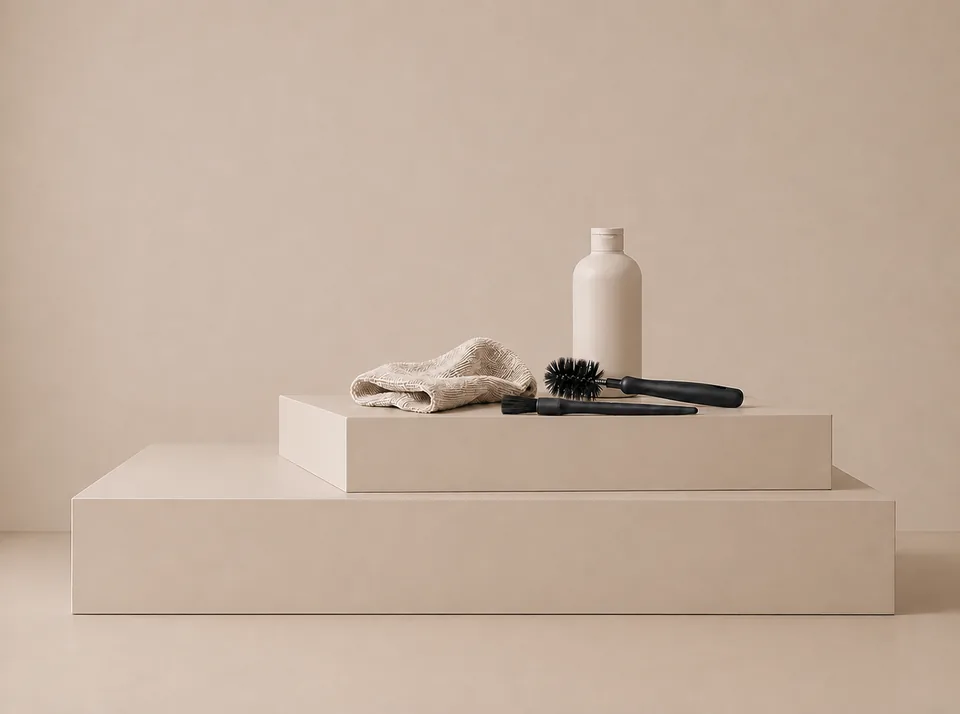
A cleaning routine is easier to follow when the necessary tools and supplies are organized and readily accessible.
Keep brushes, cloths and equipment-specific cleaning accessories together so that frequent tasks do not require unnecessary preparation. Cleaning products should remain clearly labelled and stored safely away from coffee, food and areas where they could be mistaken for ingredients.
A simple, organized system makes regular maintenance easier to complete consistently.
Before Choosing Coffee Cleaning and Maintenance
Before choosing a coffee cleaning and maintenance approach, identify which parts of your setup come into contact with coffee, milk or water and which care tasks the manufacturer recommends.
A simple manual setup may need routine washing and occasional descaling, while espresso machines, grinders and other complex equipment can require more equipment-specific maintenance.
The most practical approach is one that covers essential tasks at appropriate intervals without adding unnecessary steps to your coffee routine.
Regular Cleaning vs Deep Cleaning
Regular cleaning and deep cleaning address different levels of buildup.
Regular cleaning covers frequent tasks such as rinsing removable parts, wiping surfaces, purging milk residue and removing loose coffee grounds before they accumulate.
Deep cleaning is performed less often and focuses on areas that routine care does not fully reach. Depending on the equipment, it may involve cleaning internal coffee pathways, removing stubborn oils or completing a manufacturer-approved cleaning cycle.
The right schedule depends on usage, visible residue and the manufacturer’s maintenance guidance. Regular care should prevent buildup, while deeper cleaning should address the deposits that remain over time.
DIY Coffee Equipment Maintenance vs Professional Service
Many routine maintenance tasks can be completed at home when they are included in the manufacturer’s user-care instructions.
Washing removable parts, brushing away loose grounds, replacing user-serviceable filters and running approved cleaning or descaling cycles can often be handled without professional support.
Persistent leaks, electrical faults, internal blockages, damaged components or recurring performance problems may require a qualified technician. Equipment should not be opened or disassembled beyond the procedures permitted by the manufacturer.
Before attempting a repair, check the warranty terms, safety instructions and official service guidance for the equipment.
Cleaning vs Descaling Coffee Equipment
Cleaning and descaling solve different maintenance problems and should not be treated as interchangeable processes.
Cleaning removes coffee oils, loose grounds, milk residue and everyday buildup from surfaces, removable parts and coffee-contact areas.
Descaling dissolves mineral deposits that accumulate inside kettles, boilers, heating elements and water pathways. These deposits are primarily influenced by water hardness and how frequently the equipment is used.
Some equipment requires both processes on separate schedules. Always use products and procedures approved by the manufacturer, particularly for machines with internal water systems.
As an Amazon Associate I earn from qualifying purchases.
For Routine Machine Descaling
IMPRESA Coffee Machine Descaler, 2-Pack
- Two-bottle pack
- Universal machine compatibility
- Removes mineral buildup
For Easy Tablet Cleaning
ACTIVE 24-Count Cleaning Tablets
- 24 pre-measured tablets
- Easy drop-in cleaning
- Works across machine types
Featured Coffee Cleaning and Maintenance Guides
Maintaining coffee equipment does not need to be complicated. Understanding the basic principles behind cleaning and care can help you create a more reliable coffee routine.
Coffee Equipment Cleaning Guide
A guide to understanding common coffee equipment cleaning tasks, building a practical care routine and preventing residue from affecting performance and coffee preparation.
How to Clean and Maintain an Espresso Machine
A guide to routine espresso machine cleaning, including the coffee-contact parts, milk system and maintenance tasks that support consistent performance over time.
How to Clean and Maintain a Coffee Grinder
A guide to removing coffee grounds and oil buildup from a grinder while protecting its burrs, internal components and grinding performance.
FAQ
Cleaning frequency depends on the equipment, how often it is used and which parts come into contact with coffee, milk or water. Milk-contact parts and removable brewing components may need attention after each use, while deeper cleaning and descaling are usually performed at longer intervals. Always follow the manufacturer’s instructions, and use the Coffee Equipment Cleaning Guide to build a practical routine for the main parts of your setup.
Regular maintenance helps prevent coffee oils, grounds, milk residue and mineral buildup from affecting flavor, hygiene and equipment performance. It can also reduce avoidable blockages and make it easier to identify worn or damaged parts before they cause recurring problems.
No. Cleaning requirements vary according to the equipment, its materials and the substances it comes into contact with. Espresso machines, grinders, kettles and manual brewers each have different components and maintenance needs, so the correct routine should follow the manufacturer’s care instructions.
Most routine cleaning tasks are straightforward once they become part of a regular schedule. The important points are using suitable products, following the correct procedure and avoiding disassembly beyond what the manufacturer permits. More complex faults or internal repairs may require professional service.