
Built-in coffee stations are integrated into a home’s cabinetry or architectural layout, bringing coffee preparation, equipment storage and everyday organization into one dedicated area.
They may be incorporated into a kitchen cabinet run, an appliance garage, a pantry or a fully custom installation. Unlike movable carts or temporary countertop setups, they are planned for long-term use and should support the way equipment is accessed, used and stored each day.
A successful built-in setup requires more than available cabinet space. Counter depth, electrical access, ventilation, door and drawer clearances, task lighting and, where relevant, plumbing all affect how safely and comfortably the station functions.
The right format depends on the home’s layout, the size and type of coffee equipment, storage needs, daily workflow and whether the installation must accommodate future changes.
Explore Built-in Coffee Station Ideas
Kitchen Built-in Coffee Stations
Kitchen built-in coffee stations integrate coffee preparation into existing kitchen designs.
They can include dedicated cabinet sections, countertop areas and organized storage for machines, tools and supplies.
Consider:
- Position within the kitchen workflow
- Cabinet and counter dimensions
- Power, lighting and nearby storage
Explore kitchen built-in coffee station ideas if you want coffee preparation to function as a natural part of the kitchen rather than as a separate setup.
Appliance Garage Coffee Stations
Appliance garage coffee stations keep coffee equipment behind retractable, lift-up or hinged doors while preserving convenient access at the counter.
They suit layouts where visual clutter needs to be reduced, but the enclosure must provide enough depth, door clearance, electrical access and ventilation for the equipment. Heat-producing appliances should not be operated behind closed doors unless the installation is specifically designed for that use.
Consider:
- Equipment depth and height
- Door movement and working clearance
- Power access, heat clearance and ventilation
Explore appliance garage coffee station ideas if you want equipment concealed between uses without removing it from the main work area.
Pantry Built-in Coffee Stations
Pantry coffee stations combine storage and preparation areas in one dedicated location.
They can provide space for coffee machines, grinders, brewing tools, filters and supplies.
Consider:
- Usable counter and storage capacity
- Equipment layout and outlet access
- Everyday accessibility and workflow
Explore pantry coffee station ideas if you want equipment and supplies consolidated away from the kitchen’s primary work surfaces.
Custom Built-in Coffee Stations
Custom built-in coffee stations are designed around specific home layouts and personal coffee routines.
They can coordinate work surface, storage, electrical access, lighting and finishes within one purpose-built installation. This approach is especially useful when standard cabinet dimensions do not suit the available space or equipment.
Consider:
- Current and future equipment dimensions
- Storage and workflow requirements
- Power, lighting, ventilation and optional plumbing
Explore custom built-in coffee station ideas if you need a solution tailored to the home rather than adapted from a standard cabinet layout.
How to Choose a Built-in Coffee Station
Choosing a built-in coffee station requires more planning than a movable or temporary setup because its location, cabinetry and utility access are difficult to change later.
The most suitable design should support daily workflow, fit the equipment you actually use, provide practical storage and remain adaptable as your routine or appliance needs change.
Home Layout
The location of a built-in coffee station determines how easily it can be reached, used and cleaned without interrupting the surrounding space.
Consider:
- Daily kitchen or pantry workflow
- Access to power and, where needed, water
- Working clearance and movement around the area
- Connection with nearby storage and preparation surfaces
A well-placed station should feel integrated into the home while remaining practical during everyday use.
Equipment and Storage
Plan the station around the dimensions, access requirements and storage needs of the equipment you actually use.
Consider:
- Machine dimensions and operating clearance
- Grinder and accessory placement
- Storage for beans, tools, filters and cups
- Electrical access and ventilation needs
Planning equipment placement before cabinetry is finalized helps prevent cramped work surfaces, blocked doors and impractical storage.
Long-term Planning
Because cabinetry and utility positions are not easy to alter, a built-in coffee station should account for how your routine may change over time.
Think about:
- Whether you may add or replace equipment
- How storage needs may increase
- Whether shelves and internal fittings can be adjusted
- Access for maintenance or future electrical work
A flexible layout is more likely to remain useful without requiring major alterations.
Design Integration
A built-in coffee station should relate to the surrounding cabinetry, materials and architectural style rather than look like a separate addition.
Consider:
- Cabinet materials and finishes
- Colors, hardware and worktop surfaces
- Visual balance with the surrounding room
- The balance of open and closed storage
The goal is to create a functional coffee area that feels intentionally connected to the rest of the space.
Before Creating a Built-in Coffee Station
Before committing to a built-in coffee station, compare it with less permanent alternatives and decide how much integration, flexibility, visibility and everyday accessibility the space should provide.
Because cabinetry, utility positions and working clearances can be difficult to change later, the station format should be chosen before the location, equipment layout and storage plan are finalized.
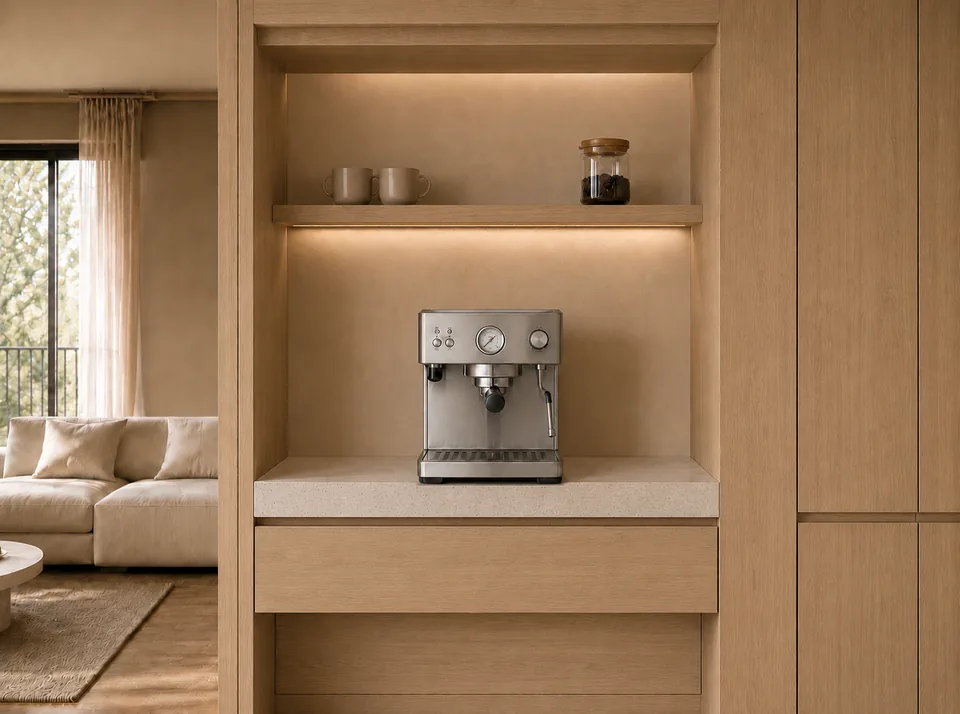
Built-in vs Freestanding Coffee Station
Built-in and freestanding coffee stations differ mainly in how permanently they are connected to the room and how easily they can be changed later.
Built-in coffee stations are integrated into cabinetry or the architectural layout. They can provide tailored storage and a visually cohesive result, but they require more advance planning and are difficult to relocate or substantially modify.
Freestanding coffee stations use independent cabinets, consoles, carts or other furniture. They are easier to reposition, replace or adapt, although they may offer less precise equipment fit and less visual integration with the surrounding room.
Consider your priorities:
- Choose built-in if you want a permanent installation coordinated with the room.
- Choose freestanding if mobility, easier replacement or future layout changes are more important.
Built-in Coffee Station vs Coffee Bar
Built-in coffee stations and coffee bars can overlap, but the terms emphasize different aspects of the setup. “Built-in” describes how the station is integrated into the room, while “coffee bar” usually emphasizes a visible preparation and serving area.
A built-in coffee station is planned as part of the cabinetry or architectural layout, often with coordinated storage, power access and equipment placement.
A coffee bar may be built-in or freestanding, but it generally gives greater visual emphasis to the worktop, displayed equipment and the preparation or serving experience.
Consider:
- Choose a built-in station if permanent integration and tailored storage are the priorities.
- Choose a coffee bar format if you want a more visible, open and presentation-focused coffee area.
Appliance Garage vs Open Coffee Station
Appliance garage and open coffee stations offer different balances of concealment, accessibility and working clearance.
An appliance garage keeps equipment behind retractable, lift-up or hinged doors while allowing it to remain positioned on the work surface. The enclosure must provide sufficient depth, door clearance, electrical access and ventilation. Heat-producing equipment should not be operated behind closed doors unless the installation is specifically designed for that use.
An open coffee station keeps machines and tools visible and immediately accessible. This can make daily preparation more convenient, but it also places greater importance on cable management, surface organization and regular cleaning.
Consider:
- How frequently the equipment is used
- Whether doors will restrict the working area
- Equipment heat and ventilation requirements
- Whether immediate access or visual concealment is more important
A combined layout can keep frequently used equipment open while concealing accessories and less frequently used items.
Built-in Coffee Station Ideas
These built-in coffee station ideas focus on three design priorities: visual simplicity, practical storage and integration with a modern kitchen. Use them to refine the appearance and organization of the station after its location, equipment and utility requirements have been established.
Minimal Built-In Coffee Station Ideas
Explore restrained built-in layouts that keep essential equipment accessible while reducing visual clutter. These ideas focus on clear work surfaces, concealed storage and a simple, coordinated material palette.
Built-In Coffee Station Storage Ideas
Discover storage-led layouts that organize machines, grinders, cups, beans and brewing tools around the preparation area. These ideas use cabinets, drawers, shelves and internal fittings to support everyday access without overcrowding the worktop.
Modern Kitchen Built-In Coffee Station Ideas
Explore ways to integrate coffee equipment into contemporary kitchen cabinetry through coordinated finishes, clean lines and carefully planned appliance placement. These ideas balance visual continuity with practical access, storage and daily workflow.
Featured Built-in Coffee Station Guides
Built-in coffee stations require careful planning because cabinetry, equipment placement and utility access can be difficult to change once the installation is complete.
These featured guides cover the core decisions involved in planning the station, integrating it into a kitchen and resolving measurements, electrical access and ventilation before the cabinetry is finalized.
How to Plan a Built-in Coffee Station
A guide to planning an integrated coffee area by considering layout, equipment placement, storage and long-term usability.
Kitchen Built-in Coffee Station Ideas
A guide to incorporating coffee preparation into kitchen layouts through practical organization and efficient use of space.
Built-in Coffee Station Measurements, Power and Ventilation Guide
A technical guide to planning station dimensions, equipment clearances, electrical access and ventilation requirements before the cabinetry and installation details are finalized.
FAQ
A built-in coffee station is a dedicated coffee area integrated into cabinetry or the architectural layout of the home. It may include a work surface, equipment storage, electrical access and organization for everyday supplies. Learning how to plan a built-in coffee station begins with evaluating the available space, equipment dimensions, workflow and technical requirements.
A built-in coffee station can be worthwhile if coffee preparation is part of your daily routine and you want a permanent, organized area tailored to your equipment. It requires more planning and is harder to relocate or modify than a movable setup, so the benefit depends on how long you expect to use the space in its current form. Comparing a built-in vs freestanding coffee station can help you decide whether integration or future flexibility matters more.
No. A built-in coffee station can fit within a single cabinet section, an appliance garage, a pantry or another compact area with sufficient counter depth, working clearance and electrical access. The layout should be based on the dimensions of the equipment rather than the overall size of the kitchen. Kitchen built-in coffee station ideas can help you identify practical ways to integrate a station into the available space.
Yes. Choose or measure the main equipment before the cabinetry is finalized because machine height, depth, operating clearance, door movement, storage and workflow all affect the design. Power access and ventilation should also be planned around the equipment’s requirements. A detailed built-in coffee station measurements, power and ventilation guide can help you resolve these technical decisions before installation.