
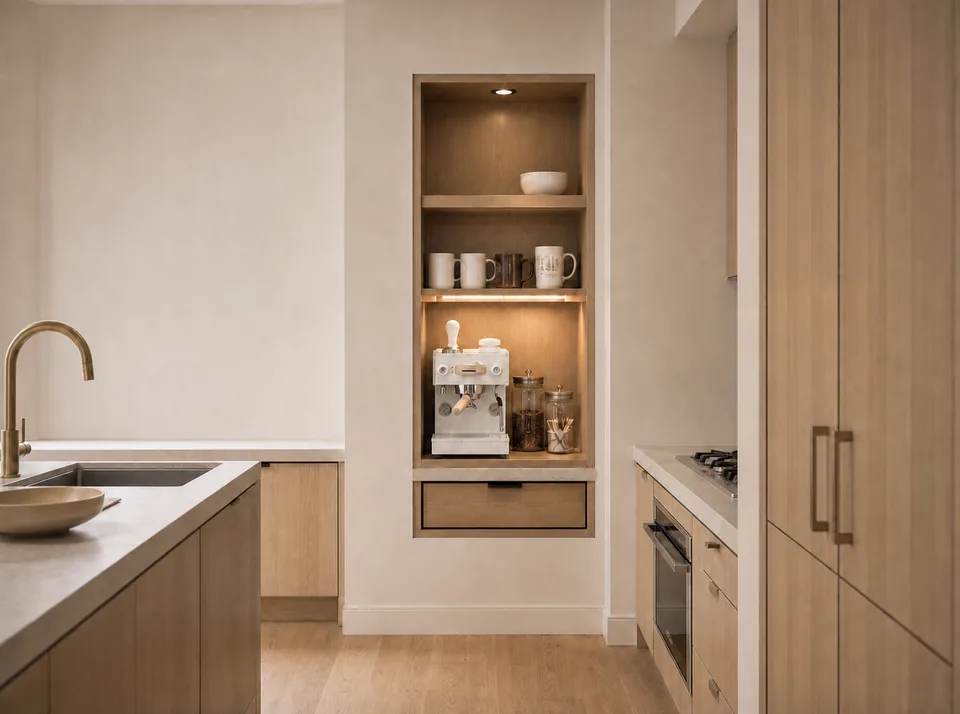
Coffee nooks create a dedicated area for brewing and storing everyday coffee essentials within an existing part of the home. They may use a section of kitchen counter, a compact cabinet or an otherwise underused corner.
Compared with a full coffee bar, a coffee nook is usually more compact and designed to blend into kitchens, dining areas, living rooms or other shared spaces.
A well-planned coffee nook does not require much room. The layout should reflect the available surface area, storage, equipment, access to power and the way the setup will be used each day.
Choosing the right coffee nook depends on where it will sit, what equipment it needs to hold and whether you want the setup to remain open, visually integrated or easy to conceal.
Explore Coffee Nook Ideas
Kitchen Coffee Nooks
Kitchen coffee nooks use an existing section of the kitchen to create a dedicated area for brewing, serving and storing coffee essentials.
They can integrate naturally with countertops, cabinets and nearby storage while keeping equipment accessible and supporting an efficient daily workflow.
Consider:
- Available counter space
- Cabinet or drawer storage
- Access to power and water
Explore kitchen coffee nooks if you want the setup to function as part of your existing kitchen layout.
Living Room Coffee Nooks
Living room coffee nooks bring coffee preparation into a relaxed seating or entertaining area rather than keeping it entirely in the kitchen.
They work best when the setup has a stable surface, convenient power access and storage that keeps supplies organized without making the room feel cluttered.
Consider:
- Furniture placement
- Access to a power outlet
- Concealed or decorative storage
Explore living room coffee nooks if you want coffee to be part of everyday relaxation or entertaining.
Corner Coffee Nooks
Corner coffee nooks turn an underused corner into a dedicated coffee area without requiring a larger section of the room.
They are especially useful where vertical storage, compact furniture or a narrow work surface can make limited space more functional.
Consider:
- Corner dimensions
- Vertical storage
- Access to power
Explore corner coffee nooks if you want to use an overlooked area without changing the wider room layout.
Small Apartment Coffee Nooks
Small apartment coffee nooks create a practical brewing and storage area where floor space and work surfaces are limited.
They rely on compact equipment, efficient storage and multipurpose furniture to keep the setup usable without overwhelming the room.
Consider:
- Equipment size and footprint
- Closed or vertical storage
- Multipurpose furniture
Explore small apartment coffee nooks if you need a dedicated coffee area that fits naturally into a smaller home.
How to Choose a Coffee Nook
Choosing a coffee nook starts with finding a location where coffee preparation fits naturally into your home and daily routine.
The most practical setup combines convenient access, suitable furniture, enough storage and equipment that fits the available space without making the surrounding area feel crowded.
Location
The location of your coffee nook affects how convenient and practical it will be to use each day.
Consider:
- Access to power and, where useful, water
- How the surrounding area is used
- Its connection to your daily routine
A good location keeps coffee preparation accessible without obstructing movement or disrupting the wider living space.
Furniture and Storage
Coffee nooks can use existing furniture or a dedicated cabinet, cart or compact storage unit.
Consider:
- A stable surface for the equipment
- Enough width, depth and overhead clearance
- Accessible storage for coffee, cups and tools
- The weight capacity of the furniture
The furniture should support your equipment safely while keeping everyday supplies organized and easy to reach.
Equipment Selection
Equipment should be selected according to the available surface area, storage capacity and the drinks you prepare most often.
Consider:
- Machine dimensions and required clearance
- Essential equipment rather than rarely used tools
- Compact or multipurpose accessories
- Space for filling, brewing and cleaning
The goal is to create a complete and practical setup without overcrowding the coffee nook.
Integration with Home Design
A coffee nook should feel connected to the room rather than appearing like an unrelated workstation.
Consider:
- Existing furniture, materials and finishes
- Visual balance and proportion
- Open or concealed storage
- How visible the equipment and supplies will be
A well-integrated coffee nook supports daily preparation while remaining consistent with the way the surrounding room looks and functions.
Before Creating a Coffee Nook
Before creating a coffee nook, it is useful to understand how different setup types, locations and layouts affect the way the coffee area functions within your home.
A successful coffee nook is not simply an empty corner. It is a planned space where coffee preparation, storage and access feel natural, organized and easy to use.
Coffee Nook vs Coffee Bar
Coffee nooks and coffee bars both create dedicated areas for coffee preparation, but they organize that space differently.
A coffee nook usually integrates into an existing part of the home, using a section of counter, a compact cabinet, a sideboard or an underused corner.
A coffee bar is typically a more clearly defined setup with its own work surface, storage and a stronger visual presence.
Consider your space:
Choose a coffee nook if you want the setup to blend into an existing room and use a limited footprint.
Choose a coffee bar if you want a more distinct preparation area with greater work surface or storage capacity.
Kitchen vs Living Room Coffee Nook
Kitchen and living room coffee nooks support different routines.
A kitchen coffee nook keeps brewing close to water, countertops and existing kitchen storage, making refilling and cleaning more convenient.
A living room coffee nook places coffee closer to seating or entertaining areas, but may require more deliberate planning for power, water refills and concealed storage.
Consider:
- Where coffee is usually prepared and served
- Access to power and water
- How much equipment and storage the setup requires
The better location is the one that reduces unnecessary movement and fits your daily routine.
Open and hidden coffee nooks provide different levels of visibility and access.
An open coffee nook keeps the machine and everyday supplies visible and easy to reach. This can make frequent preparation more convenient, but the setup may require regular organization to avoid visual clutter.
A hidden coffee nook places the setup behind cabinet or pantry doors when it is not in use. It creates a calmer appearance but requires more careful planning for door clearance, ventilation, heat and safe equipment operation.
Consider:
- How often you use the coffee nook
- How much equipment you want to keep visible
- Whether quick access or visual simplicity matters more
- Whether doors, clearances and ventilation allow safe operation
Neither approach is automatically more practical. The better option depends on the room, the equipment and how the full coffee routine works.
Featured Coffee Nook Guides
Coffee nooks are about making coffee part of your everyday living space without requiring a large dedicated area.
These guides explore practical ways to create organized and functional coffee nooks at home.
How to Create a Coffee Nook
A guide to creating a practical coffee area within an existing part of the home by considering location, furniture, equipment and daily workflow.
Small Apartment Coffee Nook Ideas
Ideas for creating a functional coffee nook in a small apartment through compact furniture, space-conscious equipment choices and efficient use of available space.
Coffee Nook Organization Guide
A guide to arranging coffee equipment and supplies so that your coffee nook remains practical and easy to use.
FAQ
A coffee nook is a compact, dedicated area within the home for preparing coffee and keeping everyday equipment and supplies organized. Learning how to create a coffee nook begins with choosing a practical location and deciding what the space needs to hold.
No. A coffee nook can be created within an existing area, such as a section of kitchen counter, a sideboard or an underused corner. Many small apartment coffee nook ideas rely on compact furniture, vertical storage and carefully selected equipment rather than a separate room.
The best location depends on your routine, available storage and access to power and water. A kitchen coffee nook can simplify refilling and cleaning, while a living room setup can place coffee closer to seating or entertaining areas. Comparing a kitchen vs living room coffee nook can help you decide which placement works better for your home.
In a small space, choose compact equipment, use vertical storage and keep only the items that support your daily routine. Practical small apartment coffee nook ideas also make use of existing furniture and storage that does not occupy unnecessary floor space.