
Espresso machines bring home espresso preparation into your daily coffee routine, but the level of control, automation, installation, and space required can vary considerably. Some machines are designed for hands-on brewing, while others prioritize convenience, a built-in setup, or a smaller footprint.
Choosing the right machine depends on how involved you want to be, the drinks you prepare most often, the space available, and the amount of cleaning and maintenance you are comfortable managing.
Explore Espresso Machine Options
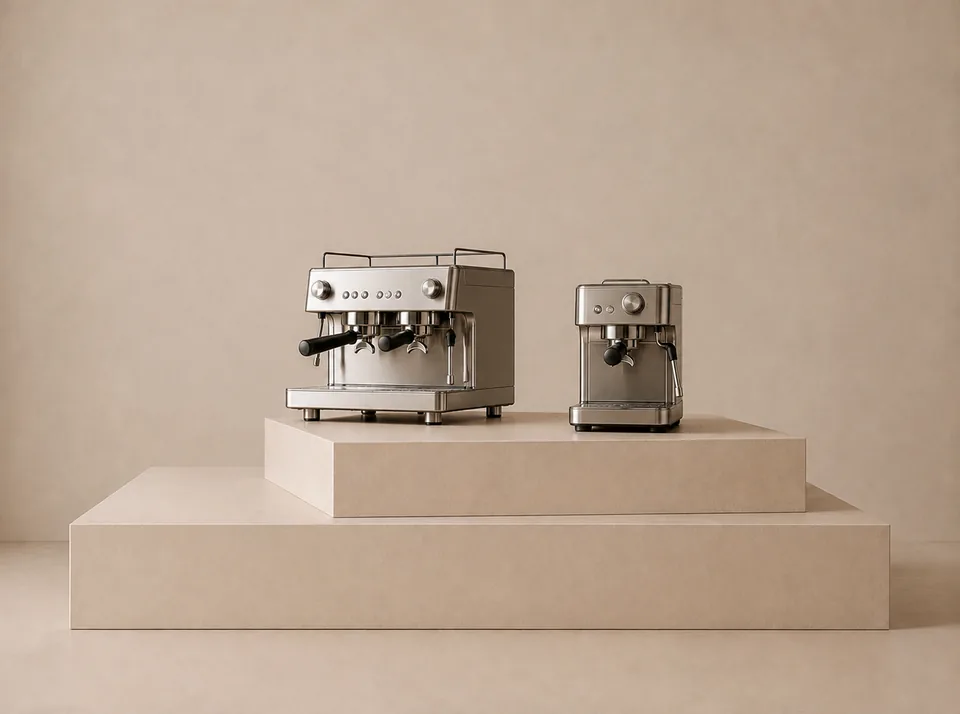
Espresso machines can differ not only in how much of the brewing process they automate, but also in how they fit into the kitchen. The options below highlight three common ways espresso machines are described, based on preparation style, installation and size.
Semi-Automatic Espresso Machines
Semi-automatic espresso machines keep the main preparation steps in your hands. You typically grind and dose the coffee, tamp it into the portafilter and start and stop the extraction yourself. Milk is commonly prepared with a steam wand, although features vary between machines.
This format suits people who want to take part in making espresso rather than have the machine manage the entire process. When comparing models, consider how much control you want, whether you already have a suitable grinder and how comfortable you are with a more hands-on daily routine.
Built-in Espresso Machines
Built-in espresso machines are installed directly into kitchen cabinetry rather than placed freely on the countertop. They can create a more integrated coffee area, particularly in kitchens where the appliance layout is being planned in advance.
The main differences are practical rather than simply visual. Installation requirements, available cabinet space, access for filling and maintenance, and the difficulty of moving or replacing the machine all matter. A built-in setup therefore involves more long-term planning than a typical countertop espresso machine.
Compact Espresso Machines
Compact espresso machines reduce the amount of countertop space required while retaining the core equipment needed to prepare espresso. They can be useful in smaller kitchens, apartments or coffee corners where a full-size setup would be difficult to accommodate.
Smaller dimensions can involve trade-offs. Water tanks, drip trays and cup clearance may be more limited, and the machine still needs enough surrounding space for filling, cleaning and everyday use. If you also need a separate grinder, include its footprint when planning the complete setup.
How to Choose an Espresso Machine
Choosing an espresso machine is less about finding the model with the most features and more about matching the machine to the way you want to prepare coffee. The right choice depends on how much control you want, how quickly you want to make drinks, which features support your routine, and how much space the setup can occupy.
Before comparing models, consider your usual drinks, the time you want to spend preparing them, the amount of hands-on work you enjoy, and the space available for the machine and its accessories.
Manual Control
The level of manual control varies widely between espresso machines. Semi-automatic models usually require you to grind and dose the coffee, prepare the puck, and start and stop the extraction, while more automated machines handle several of these steps for you.
A hands-on workflow gives you more room to adjust variables and develop your technique, but it also demands more time and consistency. Decide whether you want espresso preparation to be part of the ritual or a process the machine largely manages.
Ease of Use
Ease of use depends on more than the number of buttons. Warm-up time, controls, drink presets, cleaning prompts, and the number of steps required for each drink all affect the daily experience.
A simpler machine can suit busy mornings, while a more manual setup may appeal to someone who enjoys learning and adjusting the process. Consider how much time and attention you realistically want to give each cup.
Features and Functions
Espresso machines may include integrated grinders, programmable shot settings, pressure or temperature controls, hot-water outlets, and automatic milk systems. These features can reduce preparation time or expand the drinks you can make, but they may also add complexity, cleaning, and cost.
Focus on the functions you will use regularly rather than choosing a machine simply because it offers more settings.
Space and Setup
Measure the full area available for the machine, including the clearance needed to fill the water tank, add beans, remove the portafilter, and access the drip tray. Also allow room for a grinder, tamper, knock box, cups, and coffee storage when these are not integrated into the machine.
A compact model may suit a small kitchen, but reduced water tanks and drip trays can require more frequent attention. The right setup should remain practical during everyday use, not simply fit within the countertop dimensions.
Before Choosing an Espresso Machine
Before choosing an espresso machine, it helps to compare the systems that shape how the machine works in everyday use. The level of automation, boiler configuration, and grinder setup can affect preparation time, milk-drink workflow, counter space, and long-term flexibility.
The right choice depends on how hands-on you want to be, how often you prepare milk-based drinks, and whether you prefer an all-in-one setup or separate components.
Espresso Machine vs Automatic Coffee Machine
Espresso machines and automatic coffee machines can both prepare espresso-based drinks, but they create very different daily routines.
A traditional or semi-automatic espresso machine places more of the process in your hands. You typically grind and dose the coffee, prepare the puck, and control the extraction, giving you more room to adjust technique and flavor.
An automatic coffee machine handles most of these steps internally, often grinding, dosing, and brewing at the touch of a button. Some models also automate milk preparation, prioritizing speed, consistency, and convenience over direct control.
The choice usually comes down to your preferred workflow:
Choose an automatic coffee machine if a faster and simpler routine matters more than hands-on control.
Choose an espresso machine if you want to learn, adjust, and take part in the brewing process.
Single Boiler vs Dual Boiler Espresso Machines
The boiler system affects how an espresso machine manages brewing water and steam.
A single-boiler machine uses one boiler for both espresso extraction and steam production. Because brewing and steaming require different temperatures, the machine generally needs time to switch between the two. This setup can work well for straight espresso or occasional milk-based drinks.
A dual-boiler machine uses separate boilers for brewing and steaming. This allows both functions to operate at the same time and often provides more stable temperature control, making the workflow faster when preparing several milk-based drinks.
The right choice depends on your routine:
Choose a dual-boiler machine when faster milk preparation and independent temperature control justify the additional size, cost, and complexity.
Choose a single-boiler machine for a simpler, usually more compact setup.
Integrated Grinder vs Separate Grinder
One of the main setup decisions is whether to choose an espresso machine with an integrated grinder or pair the machine with a separate grinder.
An integrated grinder reduces the number of appliances on the counter and can make the setup easier to organize. The trade-off is that the grinder and espresso machine are tied together, so replacing or upgrading one component may be less flexible.
A separate grinder requires more counter space, but it allows you to choose, adjust, repair, or upgrade the grinder independently from the espresso machine. It can also make it easier to match the grinder to your preferred coffee and brewing style.
Consider your priorities:
Choose a separate grinder when flexibility, performance, and long-term upgrade options are higher priorities.
Choose an integrated grinder when simplicity and space efficiency matter most.
As an Amazon Associate I earn from qualifying purchases.
For Lower Cost
Casabrews CM541
- Compact counter footprint
- Built-in pressure gauge
- Milk-steaming wand
For Small Spaces / Fast Workflow
Breville Bambino BES450
- Fast heat-up
- Small counter footprint
- Strong steam wand
For Built-In Grinder
Breville Barista Express BES870
- Built-in bean grinder
- Grind-to-cup workflow
- Manual milk steaming
For More Control
Gaggia RI9380/46 E24
- Hands-on brew control
- Commercial-style steam wand
- Serviceable home design
Featured Espresso Machine Guides
Espresso machines differ in the amount of control they offer, the space they require, and the way they fit into a daily routine. These guides focus on the practical decisions that shape a home espresso setup, from choosing the right machine to planning the grinder, accessories, and features around it.
How to Choose an Espresso Machine
Choosing an espresso machine starts with understanding how you want to prepare coffee. This guide covers the main factors that affect the decision, including manual control, ease of use, available space, machine features, and the types of drinks you make most often.
Espresso Machine Setup Guide
An espresso setup includes more than the machine. This guide explains how the grinder, accessories, storage, workspace, and daily workflow work together, helping you plan a setup that is practical for your space and coffee routine.
Espresso Machine Features Explained
Espresso machines can include integrated grinders, different heating systems, programmable controls, pressure adjustments, and automatic milk functions. This guide explains what these features do, how they affect daily use, and which ones may be relevant to your routine.
Espresso Machine Comparisons
Comparing espresso machines becomes easier when you understand how different machine designs affect control, convenience, workflow, space, and installation. These comparisons explain the practical differences between hands-on and automated preparation, brewing systems, and built-in or countertop setups.
Espresso Machine vs Automatic Coffee Machine
Compare hands-on espresso preparation with an automated bean-to-cup system. This guide looks at differences in workflow, grinder setup, drink control, milk preparation, consistency and everyday maintenance.
Espresso Machine vs Capsule Coffee Machine
Compare hands-on espresso preparation with pre-portioned capsule convenience. This guide looks at differences in coffee format, grinder requirements, extraction control, milk preparation, speed, ongoing costs and daily cleanup.
Espresso Machine vs Drip Coffee Maker
Compare an espresso-based drink system with filter-coffee brewing. This guide looks at differences in drink format, serving capacity, grinder requirements, milk drinks, preparation workflow and everyday serving patterns.
Semi-Automatic vs Volumetric Espresso Machines
Semi-automatic and volumetric espresso machines use a similar portafilter-based preparation process, but they differ in how the extraction is stopped.
With a semi-automatic machine, you normally start and stop the shot yourself. A volumetric machine uses a programmed water volume to stop the extraction automatically, which can make repeated preparation more consistent and convenient.
The right choice depends on whether you prefer direct control over each shot or a more repeatable workflow with automatic shot stopping.
Built-in vs Countertop Espresso Machines
Built-in and countertop espresso machines create very different kitchen setups.
A built-in machine is installed directly into cabinetry, creating a permanent and streamlined appearance. It usually requires advance planning, compatible cabinet dimensions, professional installation, and a greater long-term commitment to the layout.
A countertop machine is easier to install, move, replace, or upgrade. The better option depends on the available space, installation requirements, budget, and how permanent you want the coffee setup to be.
FAQ
Espresso machines vary in how much skill and involvement they require. Semi-automatic models usually take more practice because you control steps such as dosing, puck preparation, and extraction. More automated machines handle several of these steps for you and can be easier to use from the beginning. The right choice depends on how hands-on you want your coffee routine to be.
You need a grinder if your espresso machine does not include one and you plan to use whole coffee beans. Espresso requires a fine and consistent grind, so a grinder with precise adjustments can make a significant difference to extraction. Machines with integrated grinders do not require a separate unit, while some models can also be used with pre-ground coffee.
Compact espresso machines can be a practical choice for apartments, small kitchens, and limited coffee spaces. Before choosing one, check the full dimensions and the clearance needed to refill the water tank, add coffee, and remove the drip tray. Also allow room for a grinder and accessories when they are not built into the machine.
Consider the drinks you prepare most often, how much manual control you want, the time available for preparation, and the space required for the complete setup. Grinder needs, milk preparation, cleaning, maintenance, and budget should also be part of the decision. The How to Choose an Espresso Machine guide brings these factors together in more detail.