
Coffee kettles can make water heating and pouring more controlled, particularly for manual brewing methods such as pour-over. The most useful features depend on how you brew: a gooseneck spout supports deliberate pouring, temperature controls improve repeatability, and electric heating simplifies daily use.
A standard kettle may be sufficient for brewing methods that do not require precise water flow. When choosing a coffee kettle, consider spout design, temperature control, capacity, heating method, handling, and the space available in your coffee setup.
Explore Kettle Types
Kettle categories often overlap. A model may be gooseneck, electric, temperature-controlled, and compact at the same time, so compare the features that matter to your brewing method rather than treating each label as a completely separate product class.
Gooseneck Kettles
Gooseneck kettles use a long, narrow spout to provide more control over the speed and placement of the pour. This is particularly useful for pour-over methods such as V60 and Chemex, where water distribution and flow rate can affect extraction.
They are well suited to manual brewing routines that benefit from controlled pouring, although spout design, handle balance, and kettle weight also affect ease of use.
Electric Kettles
Electric kettles heat water from a powered base and usually provide a faster and more convenient workflow than stovetop models. Many include automatic shutoff, while features such as temperature selection and keep-warm functions vary by model.
They suit users who prepare coffee regularly and want straightforward water heating without using a stovetop.
Temperature Control Kettles
Temperature-control kettles allow you to select a target water temperature rather than heating only to a full boil. Some models also include a hold function that keeps the water near the selected temperature for a limited period.
They are useful when you want repeatable temperature settings across different coffees and brewing methods, although temperature accuracy, adjustment increments, and hold functions vary by model.
Compact Electric Kettles
Compact electric kettles combine powered heating with a smaller footprint and typically lower capacity. They can work well in small kitchens, offices, travel-friendly setups, or coffee stations with limited counter space.
The trade-off is that smaller models may hold less water and offer fewer temperature or pouring features, so capacity and functionality should be checked against your daily routine.
How to Choose a Kettle
Choosing a coffee kettle depends on your brewing method, preferred pouring style, temperature requirements, and daily routine.
The right kettle should provide the level of flow control, heating convenience, capacity, and temperature precision your coffee preparation requires without adding unnecessary features or complexity.
Brewing Method
Your main brewing method is one of the most important factors when choosing a coffee kettle.
Pour-over methods such as V60 and Chemex benefit from a narrow spout that allows controlled water flow and more deliberate distribution across the coffee bed. French press, AeroPress, and many automatic brewing routines generally require less pouring precision, so a standard electric or stovetop kettle may be sufficient.
Consider whether your brewing method requires controlled pouring, selectable temperature, or simply a reliable way to heat the amount of water you normally use.
Pouring Control
Pouring control determines how easily you can manage water flow, pace, and placement during manual brewing.
A gooseneck spout can make it easier to pour slowly, direct water across specific areas of the coffee bed, and maintain a steadier flow. Handle balance, kettle weight, and spout responsiveness also affect how comfortable and controlled the pour feels.
Precise pouring is especially useful for pour-over coffee. For brewing methods where water is added more quickly, a standard spout may be adequate.
Temperature Control
Temperature-control kettles allow you to select a target water temperature rather than heating only to a full boil. Some models also include a hold function that keeps the water near the selected temperature for a limited period.
Selectable temperature can improve repeatability and is useful when you prepare different coffees or brewing methods. However, temperature accuracy, adjustment increments, heating speed, and hold functions vary between models.
Consider whether you will use these settings regularly or whether a simpler kettle will meet your needs.
Size and Daily Use
The right kettle size depends on how much water you usually heat, how often you brew, and the space available in your setup.
Consider:
- How much water you normally need for each brewing session
- Whether you prepare one cup or several servings
- Available counter and storage space
- The kettle’s weight when filled
- How frequently you use it
A smaller kettle may be easier to handle and store, while a larger model is more practical for repeated brewing or multiple servings. Choose a capacity that supports your routine without creating unnecessary bulk.
Before Choosing a Kettle
Before choosing a coffee kettle, compare how spout design, temperature control, and heating method affect the way the kettle fits into your brewing routine.
A gooseneck spout changes pouring control, variable-temperature settings improve repeatability, and electric or stovetop heating affects placement, operation, and convenience. These features can overlap, so the right choice depends on how you brew and which trade-offs matter most.
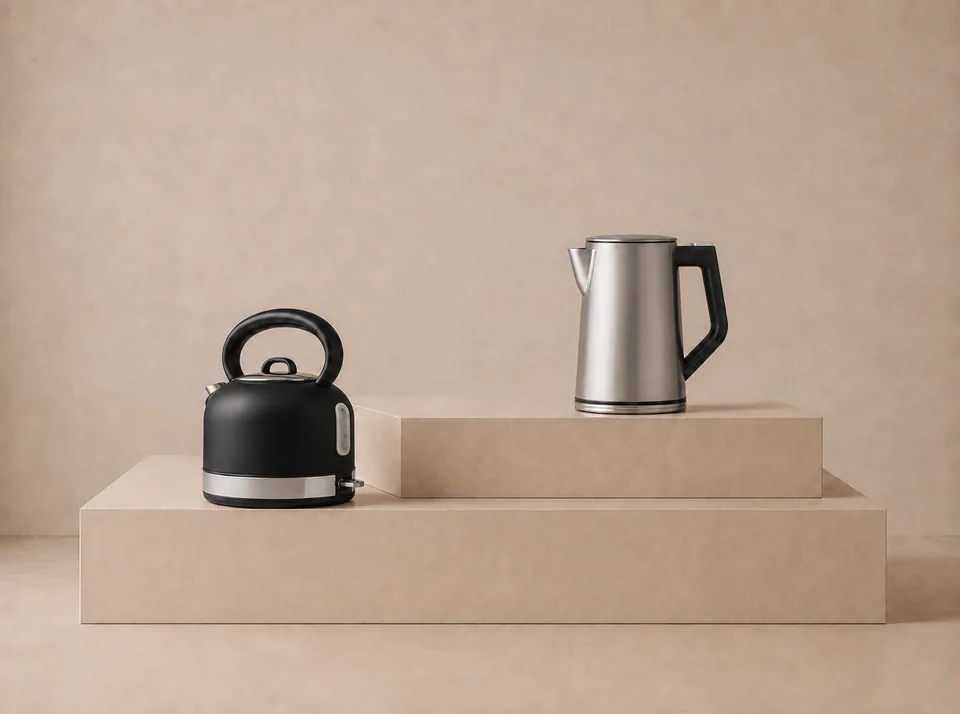
Gooseneck Kettle vs Standard Kettle
Gooseneck and standard kettles differ mainly in spout design and pouring behavior. A gooseneck spout releases water through a narrower opening, making it easier to control flow rate, pace, and placement during manual brewing.
This level of control is particularly useful for pour-over methods such as V60 and Chemex. A standard spout usually pours more quickly and is practical for general water heating and brewing methods that do not require slow, directed pouring.
Choose a gooseneck kettle if pour-over coffee is central to your routine. Choose a standard kettle if general versatility and faster pouring matter more than precision.
Variable-Temperature vs Boil-Only Electric Kettles
Variable-temperature and boil-only electric kettles offer different levels of temperature control.
A variable-temperature kettle allows you to select a target water temperature. Some models also include a hold function, although temperature accuracy, adjustment increments, and holding time vary by model.
A boil-only kettle heats water until it reaches boiling and then usually switches off automatically. It provides a simpler workflow, and lower brewing temperatures can still be reached by allowing the water to cool, although this approach is less precise and repeatable.
Choose a variable-temperature kettle if you regularly use different temperature settings or want more consistent control. Choose a boil-only model if straightforward water heating is sufficient for your routine.
Electric vs Stovetop Kettles
Electric and stovetop kettles use different heat sources and fit into different kitchen workflows.
An electric kettle heats water with an internal element connected to a powered base or cord. Depending on the model, it may include automatic shutoff, temperature selection, or a keep-warm function. It requires an electrical outlet and dedicated counter space.
A stovetop kettle heats on a compatible cooking surface and does not require a separate electrical base. Heating speed depends on the kettle, stove type, and available power, and induction users should confirm that the kettle has a compatible base.
Choose an electric kettle if automatic features and a dedicated countertop workflow are priorities. Choose a stovetop kettle if you prefer to use an existing cooking surface or want fewer electrical appliances in your setup.
As an Amazon Associate I earn from qualifying purchases.
For Everyday Electric Boiling
COSORI 1.7 L Electric Kettle
- 1.7 L capacity
- No plastic water contact
- Fast electric boiling
For Stovetop Brewing
Primula Stewart Kettle
- Stovetop whistling kettle
- 1.5-quart capacity
- Simple everyday use
For Lower-Cost Pour-Over Control
Bodum Bistro Gooseneck 27 oz
- Gooseneck pouring control
- Lower-cost electric option
- Compact 27 oz size
For Temperature Control
COSORI Gooseneck 0.8 L
- Five temperature presets
- 60-minute keep warm
- Gooseneck pouring control
Featured Kettle Guides
Coffee kettles can support more controlled and repeatable brewing, particularly when pouring technique and water temperature matter. These guides explain how kettle design, temperature features, and water control relate to different brewing methods and daily coffee routines.
How to Choose a Kettle
A guide to understanding kettle types, pouring control, temperature features, capacity, and heating methods, with practical considerations for choosing a kettle that fits your brewing habits and daily routine.
Pour-Over Kettle Guide
A guide to understanding how spout design, flow control, handle balance, and kettle capacity affect pour-over brewing. It explains which features can make controlled pouring easier and how to choose a kettle that suits your technique and setup.
Water Temperature Guide for Coffee Brewing
A guide to understanding how water temperature influences extraction across different coffee brewing methods. It explains why suitable temperature ranges vary by coffee, recipe, and brewing style, and how repeatable temperature control can support more consistent preparation.
Choosing a Kettle Material
Kettle material affects more than appearance. It can change how visible the water is, how carefully the kettle needs to be handled, how noticeable mineral deposits become and how the kettle feels in everyday use.
For most electric kettles, stainless steel and glass are two common body materials. Neither is automatically the better choice. The more useful question is which set of practical differences fits the way you use, clean and handle the kettle.
Stainless Steel vs Glass Electric Kettles
Stainless steel and glass electric kettles offer different balances of durability, visibility, weight and maintenance.
Stainless steel kettles are generally well suited to frequent handling because the body is resistant to everyday knocks and does not require the same care as exposed glass. The water inside may be less visible, although some models include a separate water-level window.
A stainless steel exterior can also make water marks and mineral buildup less obvious from the outside. That does not mean the inside stays cleaner. Mineral deposits can still develop wherever water is repeatedly heated, so regular descaling remains important even when buildup is difficult to see.
Glass kettles make it easy to see the water level and watch the heating process directly. This can be useful when filling the kettle to different amounts or when you simply prefer a clear view of the water.
The trade-off is that mineral deposits, water spots and streaks are usually more visible on glass. Keeping the kettle looking clean may therefore require more frequent attention. Glass also needs more careful handling because impacts can lead to chips, cracks or breakage.
Weight and handling should be considered separately from material alone. A glass kettle may feel heavier once filled, but the final experience also depends on capacity, handle design and the amount of water you normally heat. Stainless steel models can vary considerably in weight as well.
For daily use, think about what you are more likely to notice: the convenience of seeing the water clearly, or the reassurance of a body that tolerates routine handling more easily. Also consider how much visible spotting bothers you and how often you are willing to clean the exterior.
Choose stainless steel if durability, straightforward handling and a less visibly marked exterior are higher priorities. Choose glass if seeing the water level and heating process matters more to you and you do not mind more visible water marks or more careful handling.
FAQ
No. You can prepare pour-over coffee with a standard kettle, but a gooseneck kettle can make the process easier by providing greater control over water flow, pouring speed, and placement. This is particularly useful for methods such as V60 and Chemex, where deliberate water distribution is part of the brewing technique. Whether you need one depends on how much control you want and how frequently you prepare pour-over coffee.
Water temperature affects extraction, so using a repeatable temperature can help produce more consistent results. A variable-temperature kettle is especially useful if you prepare different coffees or brewing methods that benefit from different temperature settings. However, it is not essential for every routine. A boil-only kettle can be sufficient if you use a consistent method and do not need precise temperature adjustment.
A gooseneck kettle has a long, narrow spout designed to provide greater control over the speed and placement of the pour. This makes it easier to direct water across the coffee bed and maintain a steadier flow during manual brewing. It is particularly useful for pour-over coffee, although handle balance, kettle weight, and spout responsiveness also influence pouring control.
There is no single kettle that is best for every beginner. A simple boil-only electric kettle may be sufficient if you mainly prepare French press, AeroPress, or other methods that do not require controlled pouring. A gooseneck kettle is more useful if you plan to focus on pour-over coffee, while variable-temperature control is worth considering only if you expect to use different temperature settings regularly. Our How to Choose a Coffee Kettle guide explains how pouring control, capacity, heating method, and temperature features should influence your decision.