
The V60 is a cone-shaped pour-over brewer designed to give you direct control over the brewing process. Because you add the water manually, you can adjust the flow rate, timing and pouring pattern instead of relying on a fixed machine cycle.
Its simple construction makes the method easy to understand, but the cup can change noticeably with grind size, coffee-to-water ratio, water temperature and technique. This gives you room to refine your approach and learn how individual brewing choices affect flavor and clarity.
Whether the V60 suits your routine depends on the experience you want. It is a strong choice for people who enjoy a deliberate, adaptable brewing process and are comfortable giving each cup more attention than an automatic coffee maker requires.
Understanding V60
What Is V60?
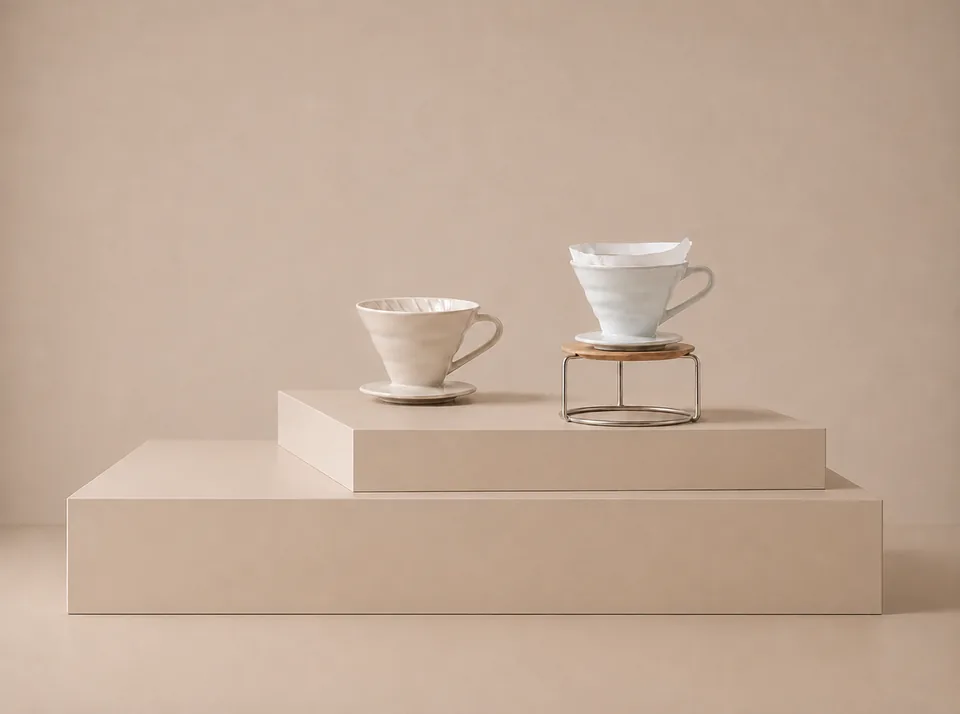
The V60 is a manual pour-over brewer built around three defining features: a 60-degree cone, spiral ribs and one large opening at the base. Ground coffee sits inside a paper filter, and hot water passes through the coffee before dripping into a cup or server.
The cone creates a deeper coffee bed, the spiral ribs allow the grounds to expand, and the large opening makes the flow rate more responsive to grind size and pouring technique.
The brewer itself is simple, but the result depends on how its variables work together. Dose, grind, water temperature, pouring pattern and total brew time can all influence the final cup.
The V60 Brewing Experience
Brewing with a V60 is an active process rather than a set-and-forget routine. The coffee bed needs to be prepared evenly, the grounds are usually allowed to bloom, and the remaining water is poured in a controlled pattern while flow and brew time are monitored.
This involvement is part of the method’s appeal. It gives you room to refine your technique and adapt the recipe to different coffees, but it also means that rushed or inconsistent pouring can affect the result.
For people who enjoy a slower and more deliberate coffee routine, the preparation can be as rewarding as the finished cup. Those who prioritize speed and minimal effort may find an automated method more practical.
How to Choose a V60 Setup
Choosing a V60 setup involves more than selecting the dripper. Brewer size and material, compatible filters, a kettle, and optional tools such as a grinder and scale all affect how practical and controllable the routine feels. A suitable setup should match your available space, preferred level of involvement and willingness to adjust your technique over time.
Level of Control
The V60 gives you direct control over grind size, coffee-to-water ratio, water temperature, pouring rate and total brew time.
A simple setup can work with pre-ground coffee and a standard kettle, while a grinder, scale and gooseneck kettle make repeatability and smaller adjustments easier.
Consider whether you want a straightforward manual method or a setup that gives you more room to measure, experiment and refine each brew.
Coffee Routine
Brewing with a V60 requires active attention, particularly while blooming the coffee and controlling the main pours.
Consider how much time you can realistically give to grinding, heating water, brewing and cleaning up. A minimal setup may suit occasional or unhurried use, while a grinder, scale and dedicated kettle can make a regular routine more efficient and repeatable.
The method works best for people who enjoy participating in the process rather than pressing a button and leaving the machine to finish the brew.
Space and Equipment
The V60 brewer itself is compact, but the complete setup may also include paper filters, a kettle, a grinder, a scale and a cup or server.
Decide which items need permanent counter space and which can be stored between uses. A small kitchen may benefit from a compact brewer and multipurpose equipment, while a dedicated coffee area can accommodate more specialized tools.
Not every accessory is essential from the beginning. Start with the equipment needed for your routine and add more precise tools only when they offer a clear practical benefit.
Learning and Practice
The V60 rewards repeatable technique. Changes in grind size, pouring speed, water distribution and brew time can produce noticeable differences in the cup.
With practice, it becomes easier to recognize which adjustment may improve a brew that tastes weak, harsh or unbalanced. This learning process appeals to people who enjoy comparing results and refining their approach over time.
Those who prioritize speed and nearly identical results with minimal input may find an automated brewing method more practical.
Before Choosing a V60
Before choosing a V60, it helps to compare its workflow and cup profile with other brewing approaches. The V60 is a hands-on pour-over method, but different brewers can offer different levels of control, body, clarity and convenience.
These comparisons can help you decide whether the V60 fits the way you prefer to prepare and drink coffee.
V60 vs Chemex
The V60 and Chemex are both pour-over brewers, but their design and filters create different brewing routines and cup profiles.
The V60 uses a cone-shaped dripper with a large opening, so the flow rate responds closely to grind size and pouring technique. This makes it flexible and well suited to people who enjoy adjusting brewing variables from one coffee to another.
The Chemex combines the brewer and server in one vessel and typically uses thicker paper filters. It often produces a very clean, light-bodied cup and can be practical when preparing a larger volume, although it still requires controlled pouring.
Consider your preferred experience:
- Choose a V60 if you want a compact brewer and more direct control over flow and technique.
- Choose a Chemex if you prefer an integrated brewer and server and regularly prepare more than one cup.
V60 vs French Press
The V60 and French Press are both manual brewing methods, but they use different extraction and filtration approaches.
With a V60, water passes through the coffee bed and a paper filter. The process depends on controlled pouring and usually produces a clearer cup with less sediment and a lighter body.
A French Press uses full-immersion brewing: the coffee and water steep together before a metal filter separates the grounds. It usually produces more body, retains more of the coffee’s oils and requires less active pouring, although some sediment may remain in the cup.
Consider your preferred experience:
- Choose a V60 if you value clarity, technique and direct control over water flow.
- Choose a French Press if you prefer a fuller texture and a straightforward steep-and-plunge routine.
As an Amazon Associate I earn from qualifying purchases.
For Everyday V60 Brewing
HARIO V60 Plastic Dripper 02
- Lightweight plastic dripper
- Easy to rinse
- Brews 1–4 cups
Featured V60 Guides
V60 brewing depends on a small set of connected choices, from equipment and grind size to pouring technique and brew time.
The guides in this section are designed to help you understand how the method works, build a practical setup and develop a more controlled and repeatable brewing routine at home.
How to Choose a V60 Setup
Choosing a V60 setup involves more than selecting the dripper. Brewer size and material, compatible filters, a grinder, kettle and scale can all affect how practical and controllable the routine feels.
This guide explains which pieces of equipment are essential, which are optional and how to build a setup that suits your space, brewing habits and level of experience without adding unnecessary tools.
V60 Brewing Guide
V60 brewing combines simple equipment with a method that responds closely to grind size, coffee-to-water ratio, water flow and timing.
This guide explains how the brewer works, which variables have the greatest influence on the cup and how to develop a balanced and repeatable approach from the initial bloom to the final drawdown.
V60 Comparisons
V60 setup choices can affect handling, brew volume, workflow and cup texture. Comparing dripper materials, brewer sizes and filter types can help you choose a setup that matches how much coffee you prepare, how you prefer to brew and the style of cup you enjoy.
Plastic vs Ceramic vs Glass V60 Drippers
Plastic, ceramic and glass V60 drippers use the same basic brewing design, but their weight, durability and preheating requirements differ.
Plastic drippers are lightweight, resistant to breakage and require relatively little preheating. Ceramic and glass models have a heavier, more substantial feel, but they should be thoroughly warmed before brewing because the material can absorb heat from the water.
Ceramic may suit users who value a traditional and solid design, while glass offers a clear view of the brewing process. The best choice depends on durability, handling, maintenance and appearance rather than expecting the material alone to create a completely different cup.
V60 Size 01 vs 02 vs 03
V60 sizes 01, 02 and 03 use the same basic brewer design, but they require different filter sizes and are intended for different brewing volumes.
Size 01 is designed for smaller servings, while size 02 covers a broader range of everyday home brewing. Size 03 provides more room when preparing larger batches or serving several people.
Choose according to the amount of coffee you normally brew rather than assuming that a larger dripper will produce a better result. The brewer and paper filter sizes must also match.
Paper vs Reusable V60 Filters
Paper and reusable filters can change both the brewing routine and the texture of the finished coffee.
Paper filters retain more oils and fine particles, usually producing a lighter-bodied cup with less sediment. They also make cleanup straightforward, although a new filter is required for every brew.
Reusable filters vary by material. Metal versions generally allow more oils and fine particles to pass into the cup, which can create a fuller texture and more sediment. They remove the need to buy paper filters regularly but require thorough cleaning and may produce a different flow rate.
The right choice depends on your preferred cup texture, cleanup routine and willingness to maintain the filter between brews.
FAQ
The V60 is approachable for beginners, but producing consistent results can take some practice. The basic process is simple, although grind size, pouring speed, water distribution and brew time can all affect the final cup. Starting with a repeatable recipe and changing one variable at a time makes the method easier to learn. Our V60 Brewing Guide explains the core steps and brewing variables in more detail.
People often choose the V60 because it is compact, relatively simple and gives them direct control over the brewing process. Adjusting the grind, ratio, water flow and timing makes it possible to adapt the recipe to different coffees. Its paper filtration also tends to produce a clean cup with less sediment, which appeals to people who enjoy clarity and a more hands-on coffee routine.
A basic V60 setup requires a dripper, a compatible filter, coffee, a kettle and a cup or server. A grinder, digital scale and gooseneck kettle are not strictly required, but they make it easier to control grind freshness, coffee-to-water ratio and pouring speed. Our V60 Brewing Guide explains the essential equipment and how each brewing variable affects the process.
The V60 can work well as an everyday brewing method if you are comfortable preparing each cup manually. The equipment is compact and cleanup is usually straightforward, but the brewing process requires active pouring and more attention than an automatic coffee maker. It is better suited to people who enjoy a deliberate routine than to those who prioritize maximum speed and minimal involvement.